SMELLS FOR THE PARIS AGREEMENT

– COULD Smells Contribute to Solving the Global Warming PROBLEMS? –

space installation (2020)

DATE: September 15(premier)-16th, 2020
CONTEXT: Mazda 100 years anniversary
CURATOR/PRODUCER: Natacha Ami (48 Nord Paris)
SPONSOR: Mazda France
D664063A-C394-430B-A5AE-A0943A195670_1_105_c
UedaFig9

Concept:

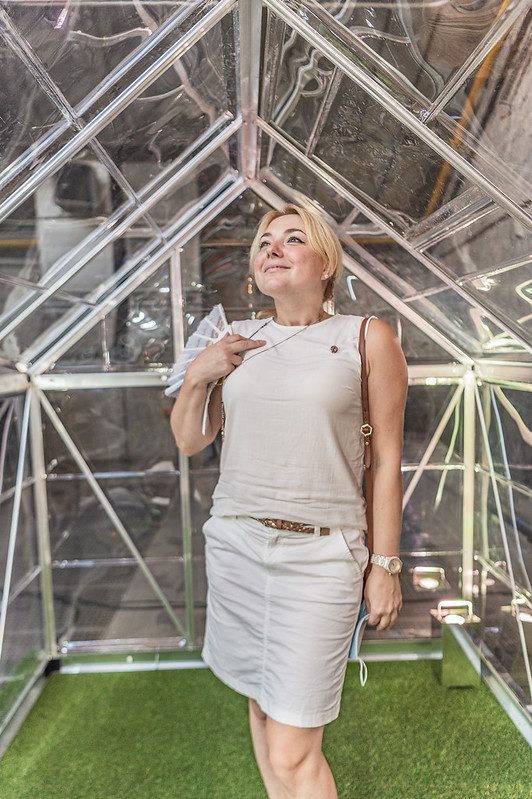
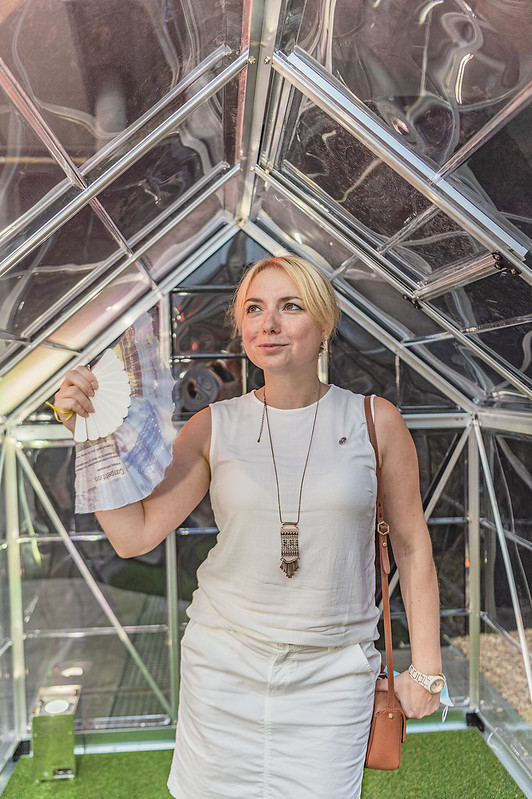
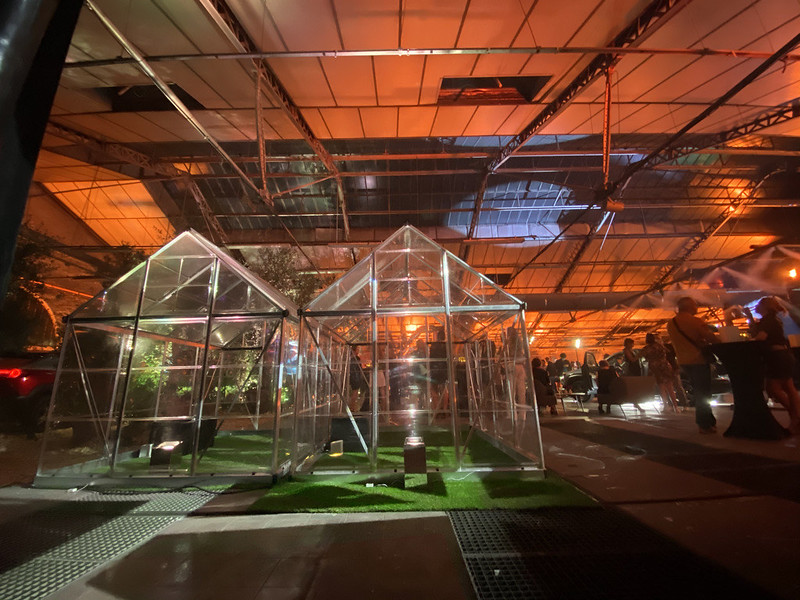
Does a smell make you feel cooler or warmer? This installation is a laboratory-like work on the senses of smell and temperature, inspired by this question. Two independent compartments are kept at the same temperature. One of them is a diffusion of a group of smells that are said to act on the cold senses, and the other is a diffusion of a group of smells that are said to act on the warm senses. The participants were asked to move back and forth between the two spaces to confirm the effect of the diffusion.

If you can feel cooler in the “cool room”, you can actively use those smells in the hot summer, or you can use the smells in the “warm room” when it’s cold. We may be able to gain resilience through smells and reduce our energy consumption.

Aromatic substances work not only on our noses, but also on our lungs, eyes and other mucous membranes. In fact, when I was testing a cold scent, my lungs felt cold, even though it was a very hot and humid summer day. The warm scent made my throat hot. Aromatic substances are absorbed through the sweat glands as well as the mucous membranes. Smells can even work on cold and warm sensations in this way, even if they are not recognized as smells.

For this research, I received some general advice from Jas Brooks, a scientist and artist at the University of Chicago.I also benefited from the “Smell, taste, & temperature symposium” which he is leading. This area seems to be still unknown even to scholars. Regarding the effects of specific aromatic substances on the trigeminal system, I referred to the article “Chemosensory Properties of the Trigeminal System” by Félix Viana. 

{Components of the Cooling Fragrance}

  • menthol
  • eucalyptol
  • thymol
  • citral
  • cinnamaldehyde
  • linalool
  • methyl salicylate
    FD-MAZDA-01-49

{Components of the Warming Fragrance}

  • Black pepper
  • Camphor
  • Eugenol
  • Red Chili Extract (self extracted)
  • Methyl Salicylate
    FD-MAZDA-01-48

Technical Production: https://olfactoryart.blogspot.com/search/label/%5BSmells%20for%20the%20Paris%20Agreement%5D

Artist Statement:

I am deeply grateful to Mazda and the agent for inviting me here and commissioning my new work.

I have been working in the Netherlands/Japan as an olfactory artist since 2005.  Actually this work is an epidemic in my long career.  This is because it is the first time I have tackled the social problem as global warming.  Climate change is a serious global problem. Why is it 37 degrees today in Paris, in the middle of September? 

What can we do about it with smells?  For example, can we change the way we feel hot and cold with olfaction? This  question was my starting point.  The title of the work is: Smells for the Paris Agreement.

I am diffusing a cooling fragrance and a warming fragrance, made with scientific data, in each of two spaces that are controlled to have the same temperature.  You are all witnesses and test subjects for this little experiment.

I asked a young scientist Jas Brooks from Chicago University for advice which molecules to use. I also read the paper regarding trigeminal nerves and transient receptor potential(TRP), the receptors related to temperature.  What was fascinating to me was that, like perfumery, it’s important to have a balance between the components.  Some components can be both cooling and warming. Methyl Salicylate is a good example.  This is a common scent used in a cold and a warm patch.  When combined with black pepper, it works for warmth, and when combined with eucalyptol or menthol, it works for coolness.

The following components were used in the final composition.  They are mostly Synesthetic:

{The Cooling Fragrance}
menthol
eucalyptol
thymol
citral
cinnamaldehyde
linalool
methyl salicylate

{The Warming Fragrance}
Black pepper
Camphor
Eugenol
Red Chili Extract (self extracted)
Methyl Salicylate

Interestingly, linalool, eugenol and cinnamaldehyde, which I used for a cooling fragrance, are considered “warm scents” in perfumery.  This is where science and art differ.  In this work, I faithfully followed the science.

It’s also interesting to note that Menthol, the heart of a cooling fragrance, only works at temperatures below 25 degrees Celsius.  Today, it’s hard to get below 25, so it’s possible that the cooling room isn’t working properly.  I wasn’t expecting it to get this hot in Paris. However people mentions that they feel like being in a forest in the cooling room.

In my own experiment I found that my throat was dry in the warm room.  Yesterday’s guest described its dry feel as “cork-like”. In contrafry, My lungs were cold in the cold room, and I also felt cold where I sweated.  Smells are absorbed by the body through mucous membranes and sweat glands, even if we don’t feel they are smells. 

Enjoy the intersection of the senses of smell and temperature (touch).

Curatorial Text (in French):

Maki Ueda – Du Kôdô à l’art olfactif

L’odorat, sens un peu ”oublié”, est remis au goût du jour par l’attrait actuel pour l’invisible et l’éphémère. La Japonaise Maki Ueda a fait de l’odeur son médium de prédilection. Elle est devenue une des références internationales de l’art olfactif contemporain émergent.
Partant de là, la créatrice s’est intéressée au Kôdô cet art japonais qui consiste à humer l’encens issu de bois précieux. Elle s’est rapidement affranchie du protocole instauré par les maîtres du Kôdô. Elle a repris en revanche à son compte, leur goût pour la performance et le jeu. Dans son œuvre, cette globe-trotteuse formée aux sciences de l’environnement, s’appuie autant sur les pratiques des arts numériques que sur celles, ancestrales, de la parfumerie de Grasse ou de Delhi.

Très vite, son approche multiculturelle et avant-gardiste de l’odorat, impose la jeune artiste auprès des milieux artistiques du monde entier. Cette pionnière de l’olfaction – qui se partage entre le Japon et les Pays-Bas – est rapidement sollicitée pour la mise en place de performances. Celles-ci mêlent danse, théâtre, musique et arts graphiques.

Les fragrances qu’elle compose, n’utilisent que des produits naturels. Elle va se former à Grasse pour mieux comprendre l’extraction naturelle du parfum. En 2014, elle décide de rejoindre Aastha, l’héritière d’une lignée d’artisans parfumeurs, de Kannauj, dans le nord de l’Inde. Cette dernière lui fera découvrir les secrets de l’Attar, une méthode de distillation à l’huile – et non à l’alcool, comme elle se pratique en Occident – vieille de 5 000 ans !

Ce qui m’intéresse dans l’art olfactif, aujourd’hui, c’est l’expérience immersive, la perte de repère et l’idée même du mouvement », résume Maki Ueda. A l’occasion du lancement de MX-30, Maki Ueda propose une expérience olfactive exclusive en référence aux accords de Paris sur le climat.

Elle convie les participants à s’interroger sur l’odeur du réchauffement climatique. Cette installation, travail de laboratoire sur les sens, l’odorat et la température, tente de répondre à ces questions. Maki Ueda présente ici deux structures indépendantes maintenues à la même température. L’une diffuse des odeurs qui agissent sur les sens froids et l’autre des odeurs qui agissent sur les sens chauds. Les visiteurs se promènent entre ces deux espaces.

L’artiste suggère à l’utilisateur d’utiliser les odeurs du froid pendant les périodes chaudes et les odeurs du chaud quand il fait froid. Nous pourrons peut-être ainsi gagner en résilience grâce aux odeurs et réduire notre consommation d’énergie.

Les substances aromatiques agissent non seulement sur notre nez, mais aussi sur nos poumons, nos yeux et nos muqueuses. « Lorsque je teste un parfum froid, mes poumons sont froids, même lors d’une journée d’été très chaude et humide. L’odeur chaude a rendu ma gorge chaude. Les substances aromatiques sont absorbées par les glandes sudoripares ainsi que par les muqueuses. Les odeurs peuvent même agir sur les sensations froides et chaudes de cette manière, même si elles ne sont pas reconnues comme des odeurs ».

Pour cette recherche Maki Ueda a travaillé avec Jas Brooks, un scientifique et artiste de l’Université de Chicago.


VIRAL PARFUM

– What if coronaviruses were something you could smell and see? –

space installation (2021)

“VIRAL PARFUM” is the winner for the Art and Olfaction Sadakichi Award 2022 for Experimental Work with Scent!

Excerpt from http://www.artandolfactionawards.org/2022awards/2022-winners/

SADAKICHI AWARD FOR EXPERIMENTAL WORK WITH SCENT WINNER!

Viral Parfum by Maki Ueda
Perfumer: Maki Ueda

The Art and Olfaction Awards celebrate excellence in global independent and artisan perfumery, and experimental work with scent.

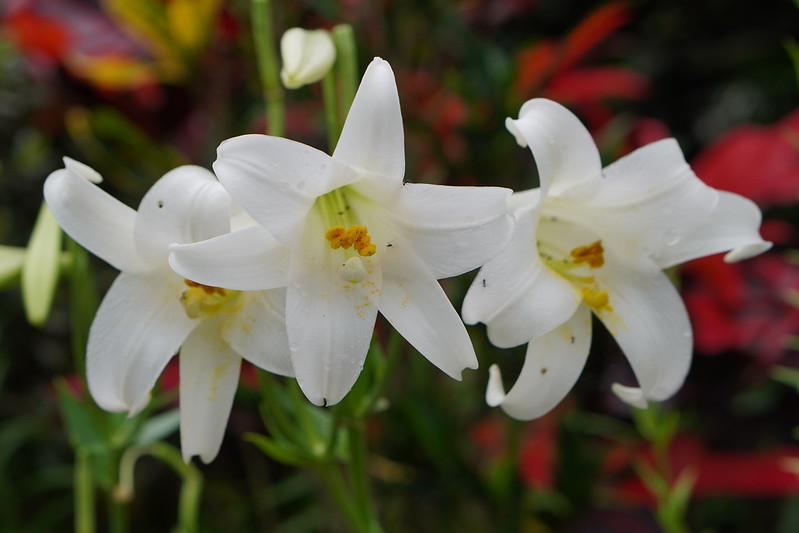
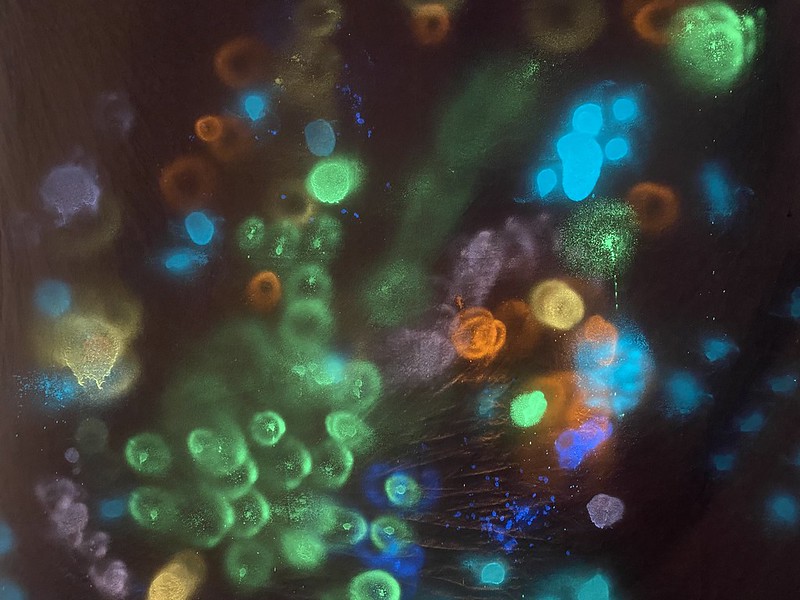
Viral Parfum is an installation which uses six scent accords to represent the different mutations of the Coronavirus. Invisible except under blacklight, together the accords create the scent of white lily: a fragrance to mourn and honor the deaths caused by the novel coronavirus. Maki Ueda is an olfactory artist based in southern Japan.
Learn more at ueda.nl.

Also, read the Artforum article: https://www.artforum.com/diary/eva-diaz-at-the-world-perfumery-congress-88792

VIMEO – artist explaining about the work: https://vimeo.com/573515602

IMG_4583_M_adjusted_withLaurel

DATE: May 7th (premier) – August 29th, 2021,
CONTEXT: Smell It! Exhibition
VENUE/PRODUCER: Städtische Galerie Bremen (Germany)
CURATOR: Ingmar Lähnemann

Concept:

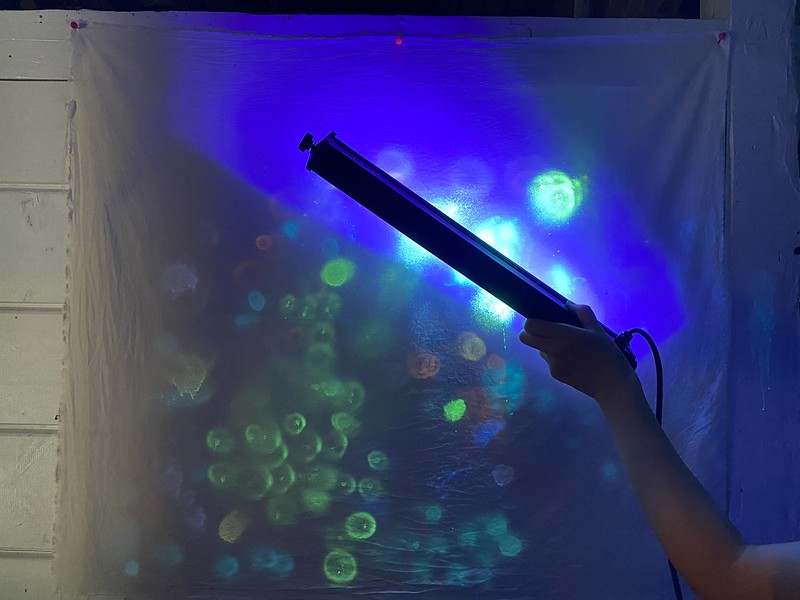
Since the appearance of the new coronavirus, we try to avoid airborne viruses by ventilating the air, meeting people in places where droplets cannot reach us, wearing masks to protect ourselves, and washing off viruses that may have gotten on our hands. In order to learn more about the virus we have been trying to see and visualise the invisible viruses, often in laboratory settings.

I came to the idea that the way this virus spreads has similarities to the way scents spread. Scents also spread in the air, so I often pay attention to air convection and ventilation, I also wear a mask when working with strong fragrances, and when handling fragrances, I change my gloves frequently to prevent the scent from spreading to other bottles.

Here are some of the similarities that scents and coronaviruses share:
– They are both too small to be seen.
– They spread through the air.
– They are spread by adhesion
– They disappear over time.

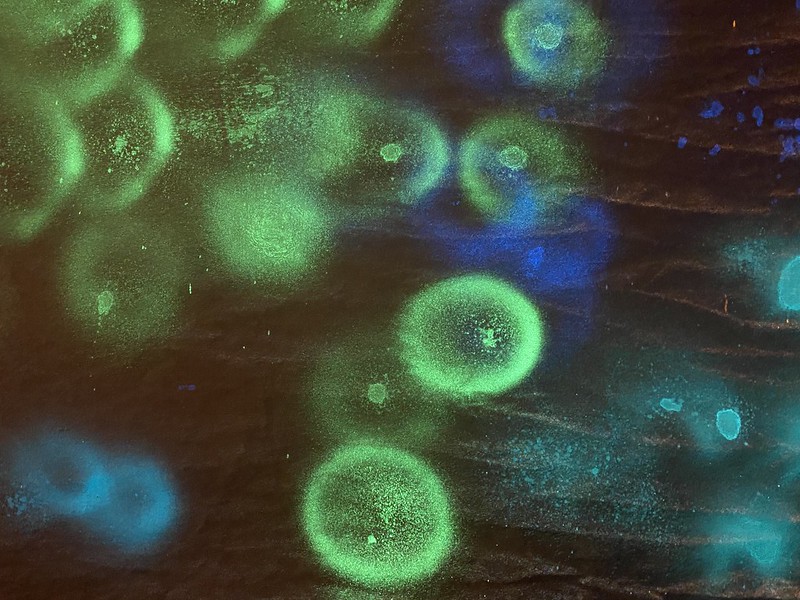
In this exhibition, I use scents to represent the different mutations of the virus. Visitors may spray the “viral parfum” anywhere they like in the room. Other visitors can detect and recognise the scents to find out where the virus is attached. The virus is invisible under normal light, but is occasionally illuminated by using a black light.

There are six different types of viruses here, including mutations. Each of them has a different fragrance, and when combined, they create the scent of white lily. It is a fragrance to mourn and honour the deaths caused by the novel coronavirus.

NO.1: Skyblue : Ylang ylang oil, Hidroxycitronellal
NO.2: Green  : Citronellol, Ionone alpha, Iso Eugenol
NO.3: Yellow : Ylang ylang oil
NO.4: Blue : Nerol, Geraniol, Paracresyl Phenyl Acetate 
NO.5: White : Linalool, Vanillin, Phenyl Acet Ataldehyde 
NO.6: Orange: Neroli Base (original composition)

IMG_4621_L_adjusted

DSC01009

Making photos:

IMG_3678

IMG_3673

IMG_3671

IMG_3629

IMG_3591

IMG_3455

More documentations: https://olfactoryart.blogspot.com/search/label/%5BVIRAL%20PARFUM%5D

THE EARTH PERFUME

smell the environmental changes

research art (2014)
FUNDING: Centrum Beeldende Kunst Rotterdam O&O subsidy
COLLABORATOR: Aastha Chauhan
th_DSC_1863

DSC_1865 copy

Overview

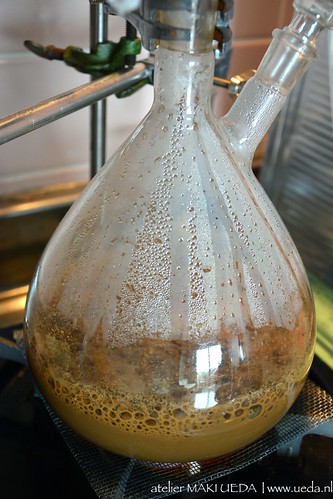
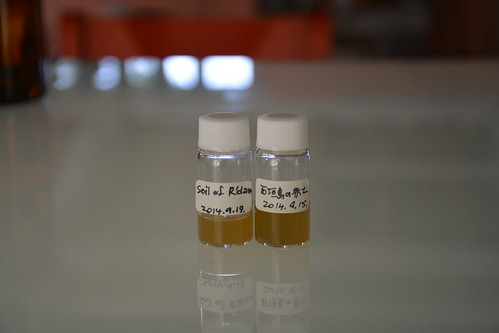
The final goal of this project is to make “The Earth Perfume” of the Dutch harbour city Rotterdam by means of distillation. The result did not smell good. But I accept that. Rotterdam is an industrial city located downstream of the River Rhine, where contaminated water and air flows in. Scents do not lie. The truth is represented in the work.

Each earth represents its local scent.  No one smells the same.  Microorganisms and vegetation of the area and the degrees of contamination appears in the scent of the earth.

The scent of so-called the first drop of rain – that’s what I am aiming to capture and make perfume out of it.

Background

This project started with an email that arrived from India one day.

“Hello. I’m Aastha from India. I was interested in your works.  My grandfather was a perfumer. In India, a traditional way of distilling and making perfume is still being practiced, but disappearing. Do you want to learn it together?”

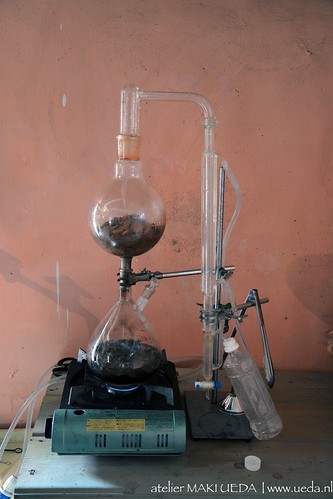
In India, from ancient times about 5000 years ago, long time before alcohol-based perfumery was developed in France, oil-based distillation and perfumery has been practiced.  The perfume oil is called Attar. There are roughly 30 types of Attar nowadays, mostly made from common plants and flowers like rose and jasmine. To my eyes “The Earth Attar” seemed to be interesting. I also made an attempt to extract the scent of the earth in Western distillation method many times, and had failed. So “to learn the distillation method for extracting and making the perfume of the scent of the earth”, I applied a grant to the Rotterdam City Art Center.

Encounter to the perfume house in Kannauj

In April 2014 I visited Kannauj, a small town along the Ganges River which is located about 200km southwest from Delhi. It’s a town known as the city of perfume and Attar making. In the middle of election campaign, it was a journey with tensions where tempted civil soldiers were walking around with guns. 

Aastha had visited Kannauj prior to my visit with her grandfather’s old diary hoping that she would find some grandfather’s footage in the town.  The Perfume House that her grandfather’s friend was running was alive, and the grandson was the current owner. “My grandfather was your grandfather’s friend!” The owner, Mani accepted her, and helped out our project.

Mani gave me all that he could show me over a period of 3 days, not only information but also materials. It was quite unusual in the world of Indian conservative perfumery.

How they make Attar

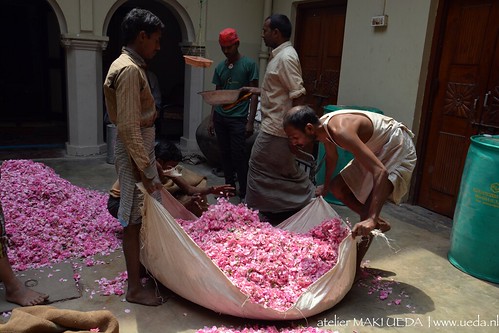
Incredible scene was waiting behind a small gate in the backstreets of Kannauj. In the courtyard, there was a pile of rose petals. Like Cleopatra’s bedroom. Later I got to know that it was arranged especially for our arrivals by Mani.

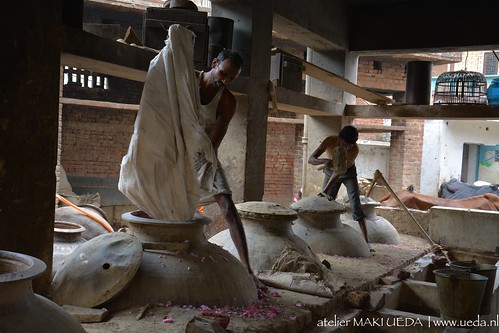
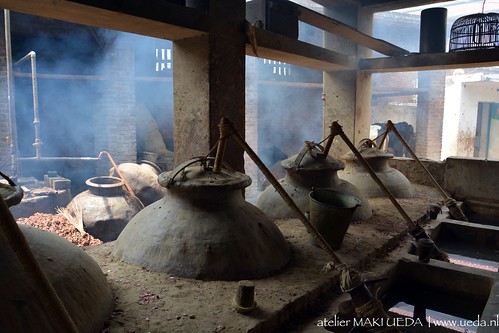
His staff pack the petals in jute bags for weighing 10kg. They carry them to the backyard, and throw them in distilling pot that had been pre-filled with water. They close the lid, and put it on fire. Solid block fuels made from cow dung are used here. To take care of cows is also part of their work.

The cooling pot is always exposed to running water. In the pot  “base-oil” sandalwood oil is waiting for the drops of cooled water. It contains the rose aroma.  It goes through the membrane of sandalwood oil and the rose aroma is adsorbed in sandalwood oil.

If you leave it running, the cooling pot gets full. Then, cooled water is collected through the hole on the bottom of the cooling pot (thus the layer of sandalwood oil is left intact) and recycled back into the distilling pot. The next day, the rose petals are replaced, and the same process is repeated. Having continued this for 4 to 5 days, the intensity of the fragrance gets increased.

Difference between Indian Attar and Western perfumery

The perfume houses usually have secret family recipes. On that day that I visited, in addition to The Rose Attar, “Hini Attar” was in the process.  Having used more than 20 kinds of herbs and spices, it smells animalic like amber and quite spicy. Raw materials are thrown into the distiller before putting on fire. This means, making corrections later is no longer possible. This is very different from the Western-style.

In the Western-style, a “aroma palette” is first made by distilling materials one by one separately, and then mix them later. In other words, you can make corrections later as much as you want. In the case of Indian Attar, all is determined by the first formulation. Natural elements also affect the result: the quality of the cow dung as fuel, thermal power adjustment, the temperature of the cooling water, and temperature of the aging period, etc. This requires experiences and intuitions: it’s like magic.

The surprising relationship between The Earth Attar and tea house

The surroundings of Kannauj is amazing.  The earth of dry red soil continues forever. When we were almost approaching the town, we took a rest at one of the chai places that you could find roadside anywhere.

In the center of the teahouse the master was making hot water with charcoal. How many cups of chai would he be brewing per day sitting there? It was not just a cup of chai, but the carefully brewed one. I took a sip. The first notice was the smell of the earth. It is the scent that rises from terracotta cup. The dry, robust scent was coloured by the scent of spices and tea. Smooth taste of milk warmed the mouth.

Terracotta cup is for one-time use only and disposed. A potter makes them usually next to the teahouse. Since the water is very valuable, it’s probably more efficient to throw it away than washing it. The cup returns to the earth. It’s 100 percent bio-degradable.

Thus a cup of chai and the earth has an inseparable relationship. Indians taste and drink the earth on a daily basis. And I got to know then that The Earth Attar is made from the  terracotta pottery. In place of rose petals, you use teracotta.

Mani said “If you spit water over the soil, there is the scent that rises that moment.  Don’t miss that moment. It is not a very strong smell. Replace the materials many times when distilling, so that the scent gets more intensity.”

Mani gave me The Earth Attar that his friend made. It was very dry scent, reminding me of rough and vast ground around Kannauj.

The Earth Attar of Okinawa (Ishigaki Isl.)

Having learned the technique in India, new question arose. How to make terracotta from the soil then? It was an unexpected problem. I have no pottery experience, and not even able to tell the clay suitable for making teracotta from. However in Okinawa where I run a second studio, pottery making is a popular traditional art. So I visited potters and learned the way roughly. My friend who was the nature guide helped me with collecting the red soil from the riverbank.

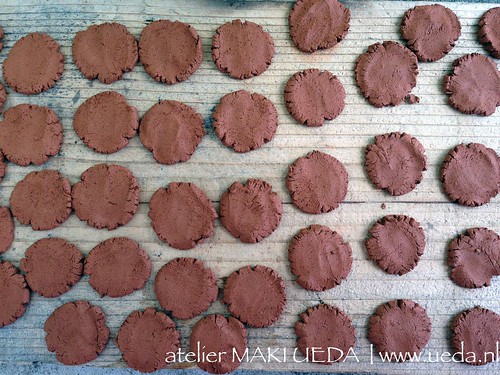
I do not have to describe the whole process here but I did make teracotta from the earth as potters would do. Then I made a number of coins for the size of the distiller. It was the process that took many many days.

Then, I applied the method I learned in India for my equipment. Over a period of several days, sometimes leisurely on the wood stove, I continued distillation. So was “The earth perfume of Okinawa” developed. It was a refreshing scent somewhat dry, reminding me of a strong sunlight in the summer.

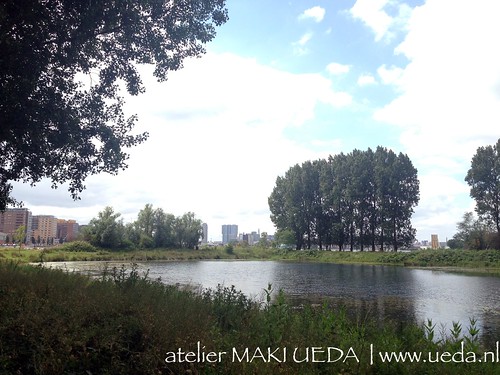
The Earth Attar of Rotterdam

Now is the Rotterdam’s earth. Since the clay is often found at the riverbank, I went to the Brienennoord Island in the middle of the river Maas (the downstream of Rhine) that flows through the center of Rotterdam. In the groomed beautiful park, I packed the earth in my car.  I must have been a suspicious person. I filtered it, made terracotta clay, shaped coins, and then distilled them. Since Rotterdam is close to the sea, the earth contained a lot of sand, which made shaping coins quite difficult.

The scent of The Earth Attar of Rotterdam was like “dead microorganisms”. First notice is the pungent smell. It’s like rotten smell of protein. Since the river is polluted and nutrient rich, microorganisms are also rich. Compared to the Okinawa one, the smell is heavier. Smells do not lie. But once its first scent disappears, the warmth of sandalwood oil appears. 

Future plans 

This project was already getting attentions in the olfactory art scene. Especially an active curator in this scene, Caro Verbeek, showed her interest. I would like to find the venue for “premier” of this work.                                                                                       

In Delhi we (together with Aastha) are planning an exhibition with the result of our porject, with probably more olfactory works from me.  An alternative gallery KOHJ showed their interest already.  We have talked to The Dutch Embassy and The Japan Foundation about the idea, and they showed their interest to support the exhibition.  This will be happening in the year 2015.

th_DSC_1149


th_DSC_1185

th_DSC_1241

th_IMG_1961

th_IMG_1630

th_DSC_1757

th_DSC_0878
th_DSC_1723

DSC_1851 copy