THE JUICE OF WAR

– Hiroshima and Nagasaki –

for “The Smell of War” exhibition

installation (2015)

DSC_2641
CONTEXT: The Smell of War exhibition http://www.thesmellofwar.be
VENUE: The castle De Loving, Poperinge, Belgium. 
CURATOR:  Peter de Coupere

When I was a child, my bedroom contained a shelf of my mother’s books and one of these book was about Hiroshima and Nagasaki. Inside I found photos of burned and rotten bodies. A field full of bodies that no longer look like bodies. It was in the high summer season so the bodies would quickly rot and flies laid eggs wherever they could.

The photos were so shocking to me that for nights I was afraid to go to sleep.  But I did not dare ask my mother to remove that book from my bedroom because it seemed rude to the victims. As I grew up I peeked into the book again and again, out of curiosity for the atomic bombings, and I realized that I was getting better in dealing with the fear. I ended up sleeping with that book until I left home at the age of 17.

I completely forgot about these pictures, but all of sudden, while I was thinking what to show here, I realized that they were the reason why I could not think anything else beside the smell of rotten flesh when I think of “the smell of war”.

In other words, working on this concept was digging into my memories.


Instruction:
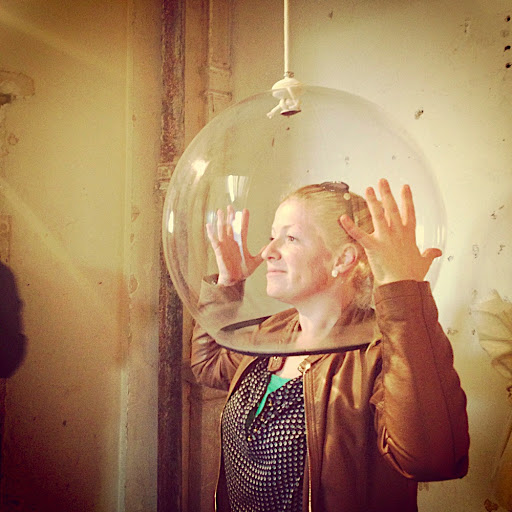
Please put your head in a bowl. This smell was manually extracted from the juice of burned and rotten flesh.

The prime minister of Vlamish government also enjoyed the work at the opening.

Production:

This is a bizarre story of purchasing meat of 20 euros at a supermarket, and made it rotten till it starts stinking for extracting the smell… I am a bit ashamed to tell you the whole story but this is the real story behind this work.

This is a bizarre story of purchasing meat of 20 euros at a supermarket, and made it rotten till it starts stinking for extracting the smell… I am a bit ashamed to tell you the whole story but this is the real story behind this work.

When the curator Peter de Coupere asked me to participate in the exhibition with the theme of “the smell of war”, I could not think of anything else than the smell of Hiroshima and Nagasaki. That would be the case by most of Japanese. We grew up with reading the cartoons “Hadashi no gen はだしのゲン”, with full of illustration of burned and rotten corps and maggot. Also it illustrates the bad odor.

The interface design:
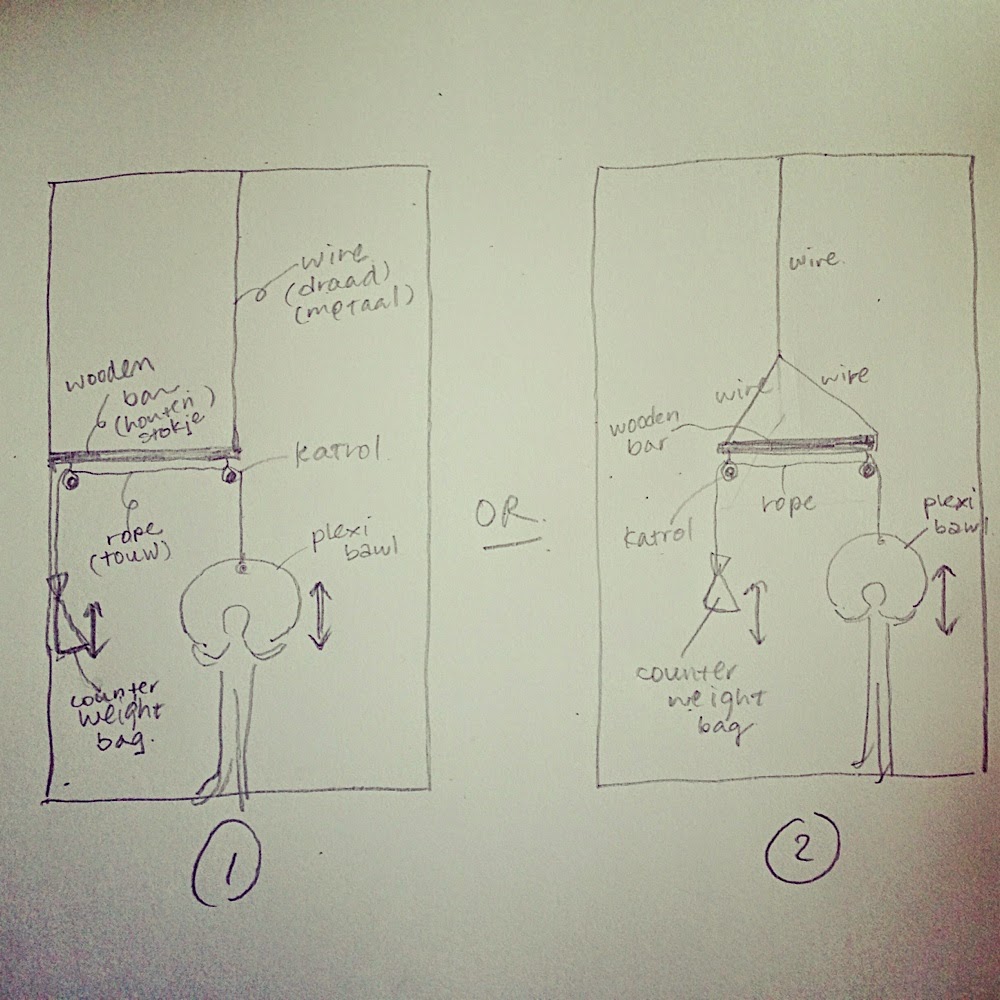
Purchasing the parts for “katrol”
 

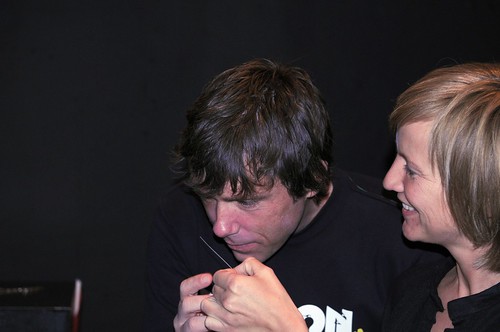
I sew the acrylic bowl myself because there was no company who could do this… it was quite some work.

I asked Peter, the organizer, for hanging the bowl with some instructions.

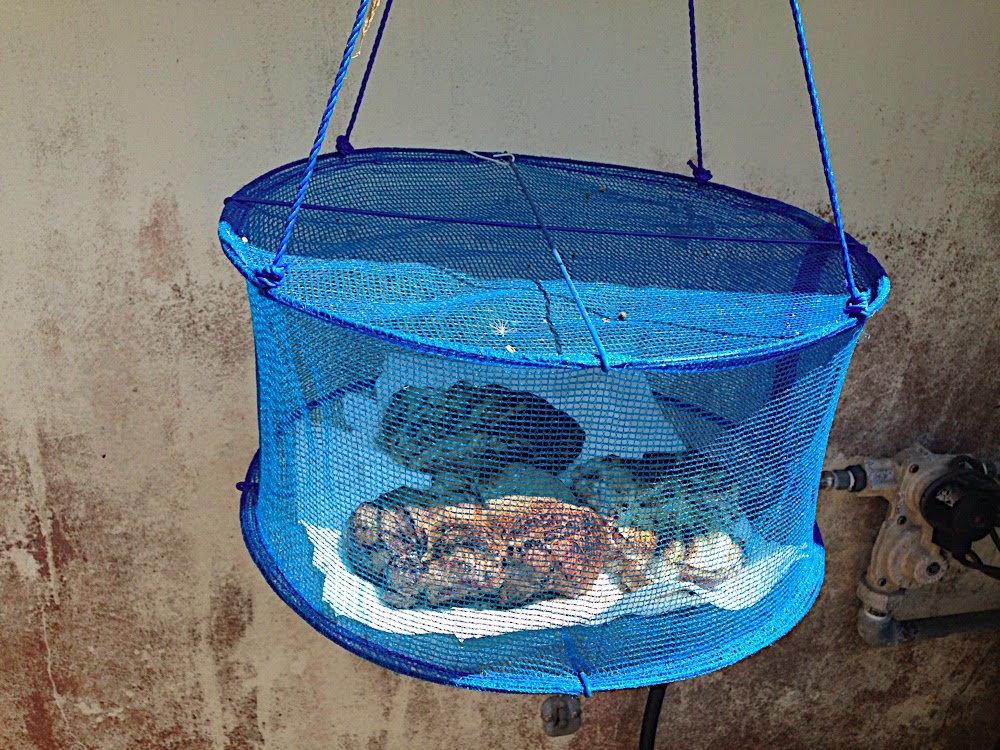
According to the testimonies of those who experienced it, the victim was charred in an instant, and after the black rain, the sun continued to shine and decayed as it did. It was the hottest time of the year. I simulated this process at my atelier in Japan: I bought pieces of meat at a local supermarket: chicken and pork and whatever I could find, and burned them.
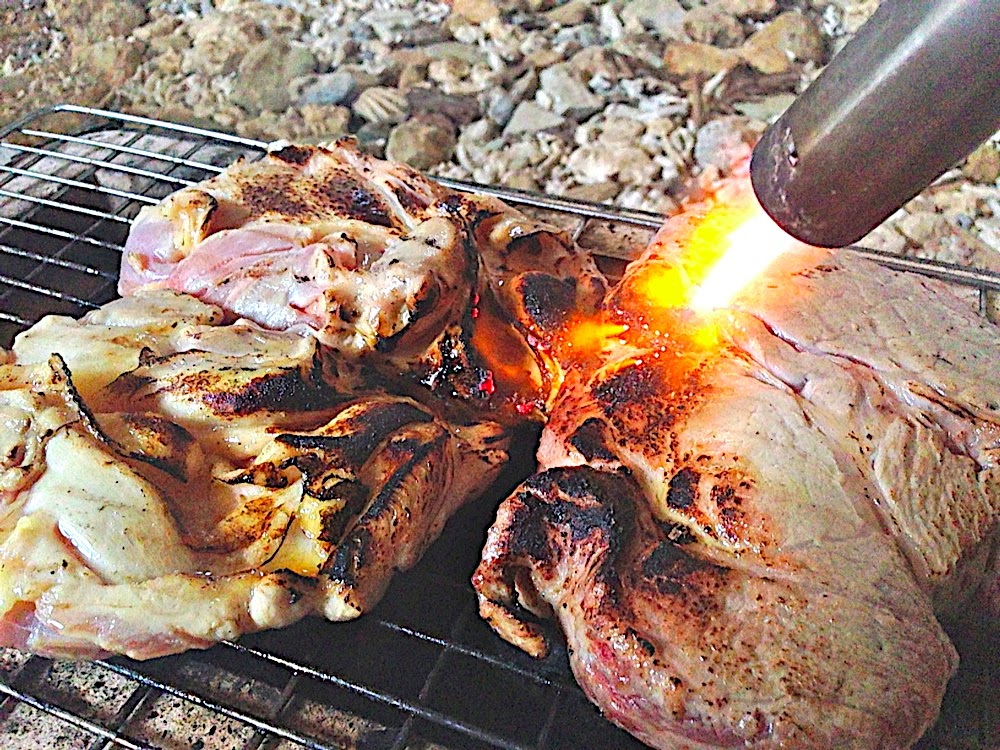
And dried them for 10 days in the sunlight.

This is the simulation of Hiroshima and Nagasaki. It was high in the summer time when they got bombed, and the burned corps got rotten quickly.  Flies lay eggs and it stank terribly everywhere.

After 5 or 6 days they started to smell like a garbage.  Around the 10th day it started to stink sour, and this was the limit (also for my neighbor…).

I extracted a little to check the smell and turned out that it was missing the burned scent, so I burned them extra.

Then sliced them.  My cutting board was suddenly covered with the flies. It was like a horror movie. I couldn’t inhale even, so I inhaled the fresh air 10meters away and ran to the cutting board, and repeated this.

After the extraction, I filterd it, but it also releases smells everywhere… I got headache from it.  If I would have continued this process I would have gotten depressed.

In my fridge is the extract and beer mixed up…it’s safe as long as it’s concealed 🙂

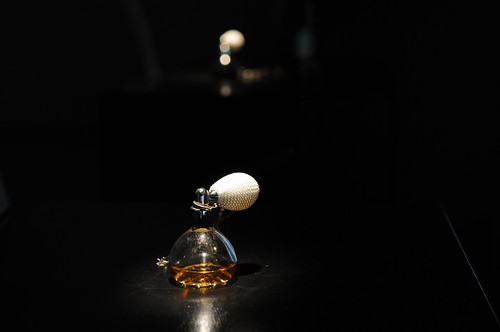
eau de parfum PERFECT JAPANESE WOMAN

– a perfume art for filling imaginations for a perfect Japanese woman –

perfume artwork, installation (2008)

CONCEPT

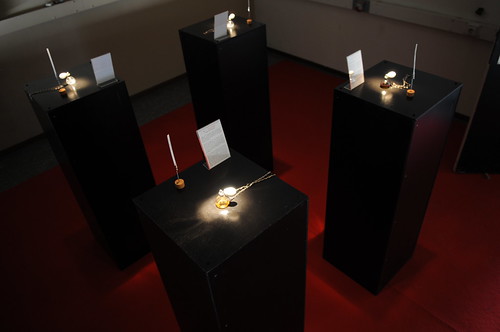
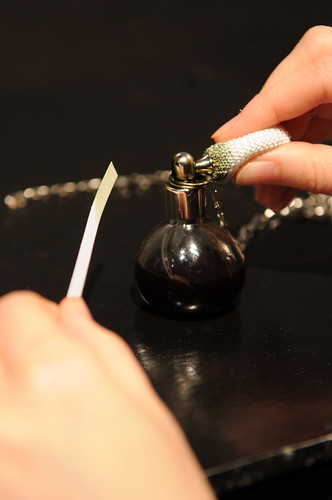
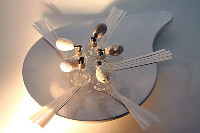
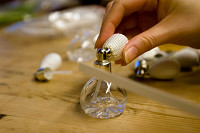
This artwork consists of 4 fragrances.  Like in a perfume shop, you are free to spray them on the paper strips, smell them, and even to wear them.  After spraying, please allow 20 seconds until alcohol vaporizes completely, then enjoy the smell.

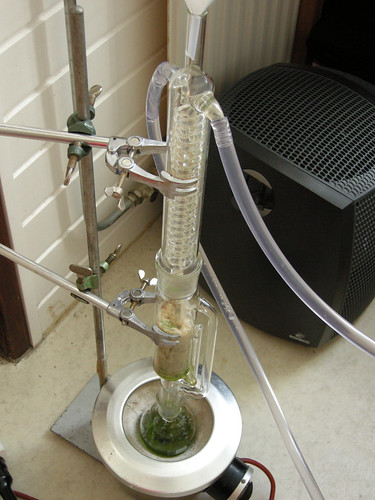
Each smell symbolizes how Japanese society expect women to be.  All the essences are manually extracted from the natural (raw) materials with distillation method or alcohol extraction method by the artist.

DSC_2062

DSC_2070

DSC_0990

DSC_1021

ACCOMPANYING TEXTS

No. 1  Nukamiso

– the scent of motherhood –

There is an expression about housewives in Japanese: “A woman that stinks like Nukamiso”.  It’s an expression for the women who are so much stuck in the family life that they are not attractive as women anymore.

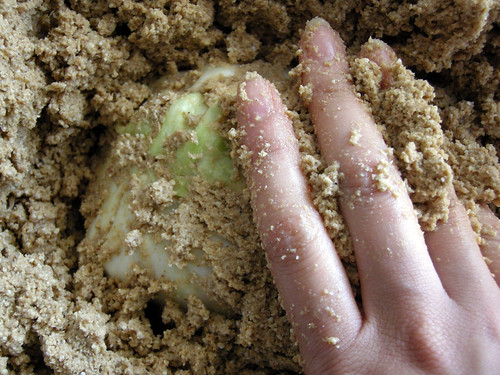
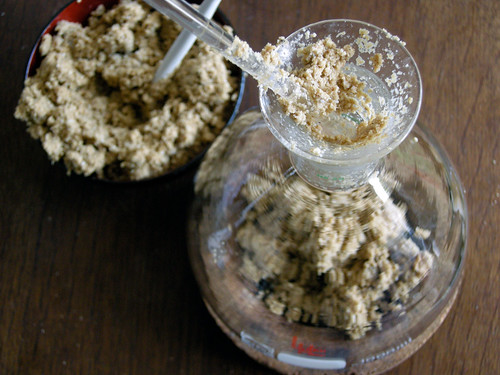
Nukamiso is salted rice-bran paste for making pickles.  Every family used to have a bucket that looks like a sauerkraut barrel.  The Nukamiso paste needs daily maintenance.  Therefore the hands of the housewives used to stink pretty sour like Nukamiso .  Mentioning such a smell was used as a metaphor for insulting housewives.

But that is slowly becoming the past.  Nowadays, Nukazuke became something to buy at the supermarket, so no woman knows anymore how to make Nukazuke at home.  In the near future women that stink like Nukamiso would not be seen with the traditional sense, but would be recognized as super feminine and sexy women!  Don’t be too late.  When you serve Nukazuke to your husband, make sure that you spray this perfume on your hands, so that he thinks that you’ve made it yourself.  This is the eternal scent for motherhood.

DSCN5711
DSCN5712

(It’s a pickling paste made with rice bran. It smells like ‘zaurkraut’. I used alcohol to extract the smell.)

No. 2  Tatami

– the scent of freshness as new tatami

A Japanese proverb says: “Wives and tatami’s are better when they are new.”

Tatami is the traditional  Japanese carpet and floor woven from rush.  The traditional house is made with tatami and shoji (rice paper doors and windows).  New tatami is always preferred because it’s clean and also giving the fresh and comforting smell of rush.  However the smell disappears as time goes by.  That has become a metaphor for a wife.

You would question: is it only a wife that is better when it’s fresh?  How about a husband then?   Let’s leave that question aside for a moment.  If you want to feel fresher and younger as a woman, this perfume is ideal for you.  It’s the perfume for any generations.

* Most of the Japanese women give up their jobs and become pure housewives when they get married or when they get children.

DSCN5481

DSCN5482

(Japanese people make hard carpet with weaving this grass. The whole floor of Japanese house is made with this mat, so it’s an important substance of Japanese house-smell. I used alcohol to extract the smell.)

No. 3  Miso Soup

– the scent of a woman in the kitchen –

A happy morning is to wake up with the sound of the kitchen and the smell of miso soup – that’s the traditional image of a family.  Japanese people eat a warm meal in the morning.  Perhaps it has already become the past.

If you want to wake up your family with such an elegance, this perfume can help you.  This Miso Soup Perfume can be used as a room spray.  The family will wake up with the happiness resulting from the smell of Miso Soup.

This perfume is also useful for fooling the nose of your husband, in case you want to pretend that you’ve been working all day in the kitchen.

DSCN5684

DSCN5685

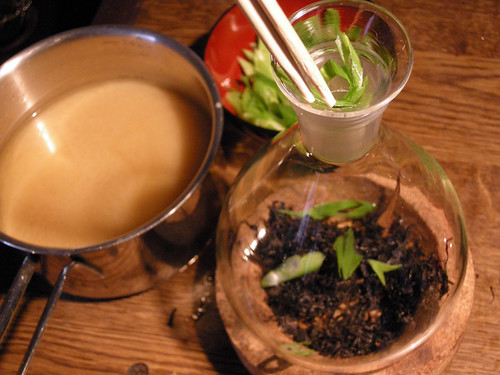
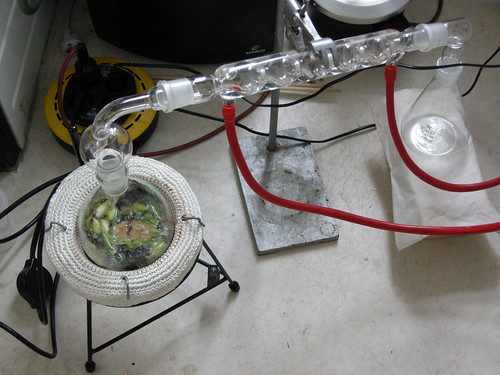
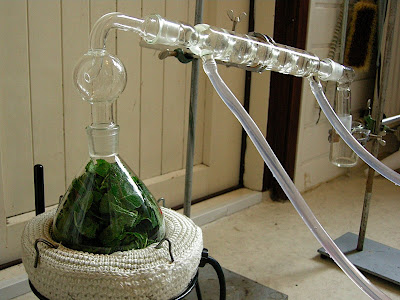
(It’s a national soup made with miso, a fermented soy bean paste. I made the soup in the flask and extracted the smell with water distillation method.)

No. 4  Soap

– the scent of pureness and cleanness –

One of the most important morning rituals for  Japanese high school girls is to wash their hair just to scent the hair with the smell of shampoo.  If you don’t have time to take a shower in the morning, you can scent your hair and your body with this perfume:  the smell of the soap.

Japanese men prefer women that represent pureness and cleanness.  Don’t worry if you aren’t.  This perfume will also emphasize the attractive contrast in yourself.

* Japanese people like the smell of soap very much.  Women often purchase perfumes that smell like a soap.

DSCN5692

DSCN5705

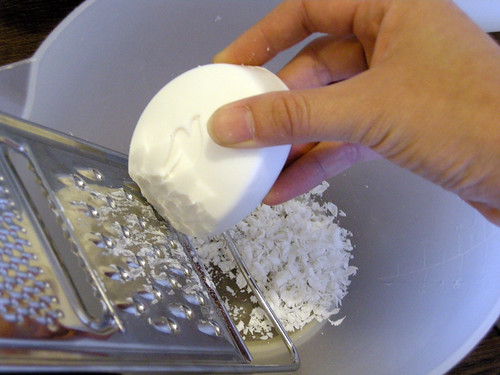
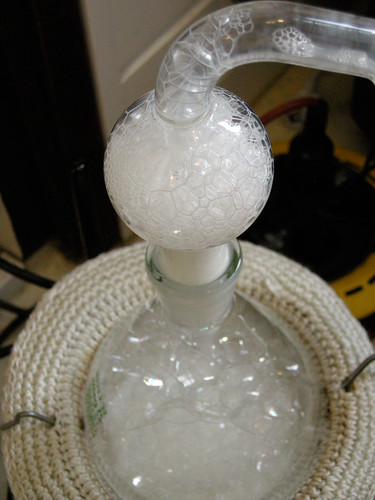
(I scraped a soap and extracted the smell with water distillation method.)

OTHER EXHIBITIONS

Gallery Roodkapje, Rotterdam (PREMIER), 09.2008.

Dutch Design Week, Eindhoven, 17-25.10.2009.

World Technology Network Award, New York, 07.2009.

Artists Summit Kyoto, Japan, 12.2009.

Aesthetic of Olfactory Art Conference, Japan Foundation, 05.2015

CREDITS

CURATOR: Camera Japan Festival 2008

OPEN SAUCES

– a technical and social food art event –


date: Nov. 22, 2008

concept, realization: FoAM


THEME


  • open source & open sauces
  • the sense of taste & the sense of smell
  • food crisis, trading, logistics,
  • future of the food etc.etc…
  • Not to forget: to taste!

photos by: Alex Davies


CONCEPT

http://fo.am/open_sauces

2008-11-22 18:00 Europe/Brussels
2008-11-22 23:00 Europe/Brussels
Location: FoAM Lab, Koolmijnenkaai 30-34 Quai Des Charbonnages, B-1080 Brussels, Belgium

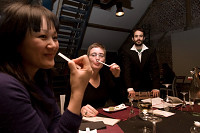
FoAM and the Guild for Reality Integrators and Generators invite you to a synaesthetic dinner, to jointly sample, celebrate and debate the future of food.

Food is a nutritious and delectable product of our reciprocal, sustaining relationship with the environment. It is also one of the oldest cultural expressions, rooted in hospitality and sharing. As the gastronome Brilliat-Savarin noted three centuries ago, “the discovery of a new dish does more for human happiness than the discovery of a new star.”

Open Sauces will unfold in a sequence of experimental courses, matched with drinks, improvised music and esteemed guests. While savouring the foods, the guests will be engaged in table conversations, sharing experiences, recipes and ingredients needed to demystify cultural, environmental, technical and ethical aspects of contemporary food systems. From molecular gastronomy to fair trade, from permaculture to food-tracking, from open source to open sauces, we will blend seemingly unrelated elements of our food chain. In an era riddled with environmental and cultural anomalies, these transdisciplinary and trans-local connections will become one of the keys to our survival, as individuals, communities and species.

With: Alexandra Deschamps-Sonsino, Kultivator, Sher Doruff, Maja Kuzmanovic, Alok Nandi, Sneha Solanki, Wietske Maas, Matteo Pasquinelli, Kate Rich, Femke Snelting, Andreas Strauss, Maki Ueda, Allison Zinder and other local and trans-local food experts and enthusiasts.

There are limited places for this event so please RSVP if you would like to attend.

The extended menu (in the form of a cookbook) is available online at http://opensauces.cc/open.sauces.pdf


MY CONTRIBUTION

Green Peas & Mint Soup

15 11 10


  • gaseous <—- the perfume dish that I contributed
  • fluid
  • (half)solid


It was my role to give a toast for this course. (The toasts were related to the each course.) My toast:

If you pinch your nose when you eat, you wouldn’t taste much flavors. The role of smell is quite crucial in cookery, because 70 % of tasting is said to be smelling. The rest 30 % is saltiness, sweetness, sourness, bitterness, umami, and some texture. The smell or aroma of the food comes in to the nose through the nose holes, but also from the back of the nose by chewing. Good test would be to chew the food with the mouth open. You wouldn’t taste much. This transparent liquid in the perfume bottle is distilled green pea & mint soup. The aroma’s of the soup is condensed and concentrated in this liquid. In other words, it’s the same liquid that you can also find on the lid. Now, what happens if we don’t close the pan when making a soup? You might find an answer in this perfume. You can spray it in your mouth.


DEVELOPMENT

http://scent-lab.blogspot.com/search/label/%5BOpen%20Sauces%20%7C%20FoAM%5D


REFERENCES

Food pairing:

http://www.foodpairing.be/

http://khymos.org/pairings.php


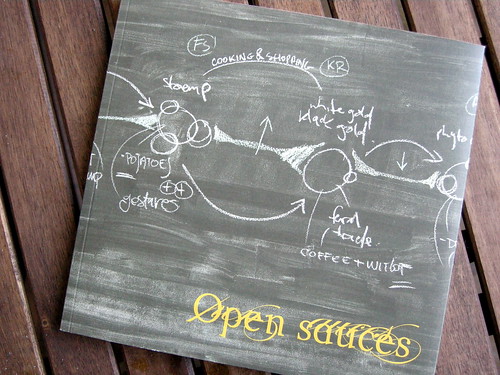
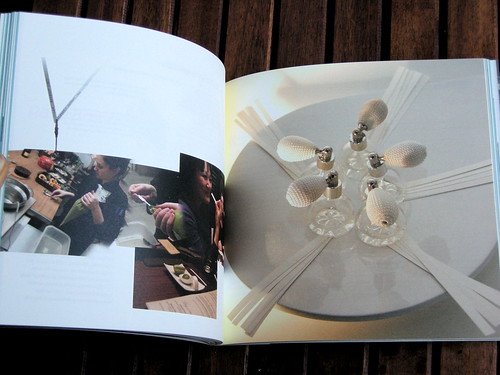
OPEN SAUCES BOOK

A book that covers the whole evening of memorial dinner event Open Sauces is published.

DSCN9535

DSCN9536

ISBN 978-90-810733-0-1

 download the electronic edition of the “Open Sauces” cookbook in PDF: http://opensauces.cc/open.sauces.pdf

  • with full recipe of the evening
  • with full recipe of Edible Perfume Workshop
  • with full recipe of “green peas and mint soup – gaseous, fluid, solid -“
  • it’s a MUST have book for those who are interested in molecular gastronomy, food art, and cooking with scents in priority


From the introduction…

This book is designed as a collection of the “toasts” and their accompanying recipes from the Open Sauces dinner. It is a scrapbook – a “common-place book” in the parlance of earlier centuries – and a book of commons. Commons, a term denoting shared public resources, can be traced back to the sharing of provisions, of rationing limited amounts of foodstuffs to feed a whole community. Similarly, Open Sauces offers bite-sized morsels of diverse aspects of contemporary food culture – whether curious information, case studies, or specific techniques – to feed a diverse group of readers. The book also contains the recipes for the complete, seasonal Open Sauces menu, designed for twenty-five people. The recipes list the original amounts; however, as each course was quite small, the quantities cited in the recipes could be used for four to six people if served in a two or three course dinner. In several recipes the amounts are approximate, as this is the preferred method of cooking and sharing recipes at FoAM. The recipes and related texts are available online at http://opensauces.cc in editable form. Improvements, adaptations, comments, questions and suggestions are more then welcome. After all, Open Sauces should stay true to its title.