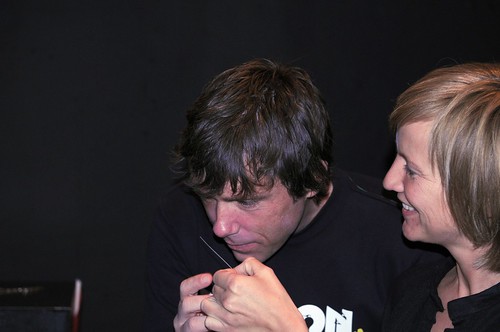
Smell is the medium used by artist Maki Ueda. She takes you on a sensory journey to 17th-century Japan when the Dutch were stationed on the artificial island Deshima off the Japanese coast. The Japanese history of smell cannot be told without including the role of the Dutch: the Dutch East India Company (VOC) brought cloves, nutmeg, other spices and essential oils to Japan. The Dutch also introduced new distilling techniques to the Japanese in the 17th century.
Smells from Japanese History
Ueda uses a range of extraction techniques for oils and extracts odours from daily life. Here she uses smells that refer to the history shared by the Netherlands and Japan. Her installations are based on historical fact and arise in her imagination. In this space Ueda has created a maruyama geisha, a geisha’s chamber. These geishas served as temporary wives for the heads of the VOC, because Western women were not allowed to enter Japan at that time.
PLEASE TOUCH
You are invited to sniff around and survey the room. Step into the role of the geisha or that of the visiting VOC chief. Lie down on the tatami mats, powder your face and sample the odours of old Japan, smells that were so exotic to the first Dutch visitors.
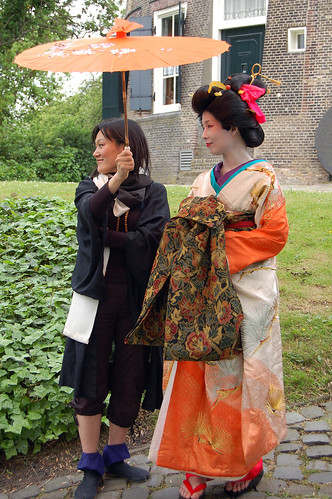
Live Geisha Performances
A live “geisha” performance will take place here on 16, 17 and 30 May; 6, 13, 14, June; 4 July (Museum Night 8 pm – 11 pm) and 5 July
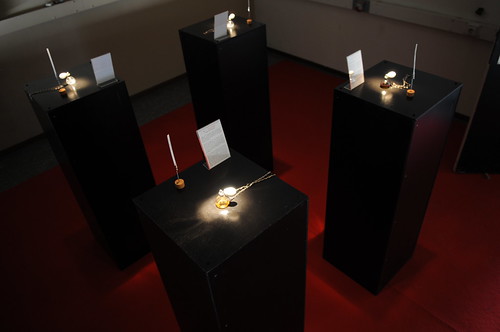
Ueda’s second installation is in room 24 of the museum, the Beer Brewers Guild Chamber: The Head of the VOC Visiting a Geisha
– a perfume art for filling imaginations for a perfect Japanese woman –
perfume artwork, installation (2008)
CONCEPT
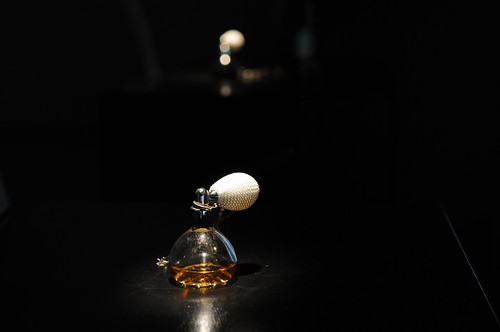
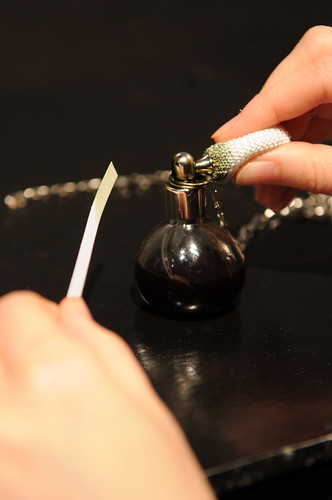
This artwork consists of 4 fragrances. Like in a perfume shop, you are free to spray them on the paper strips, smell them, and even to wear them. After spraying, please allow 20 seconds until alcohol vaporizes completely, then enjoy the smell.
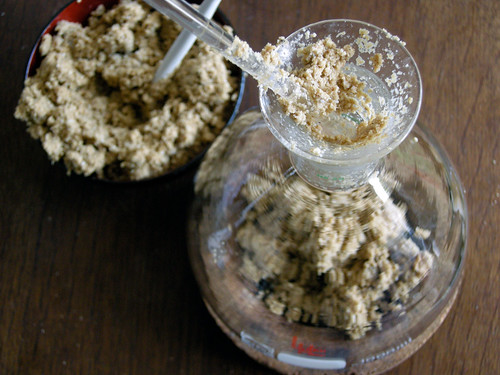
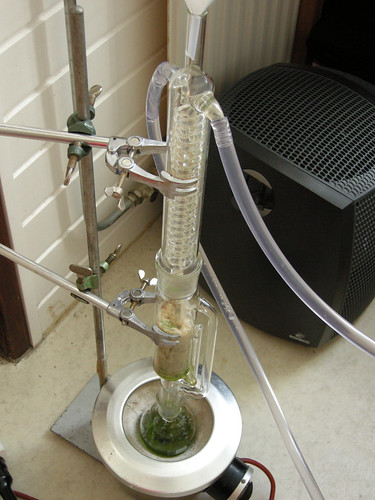
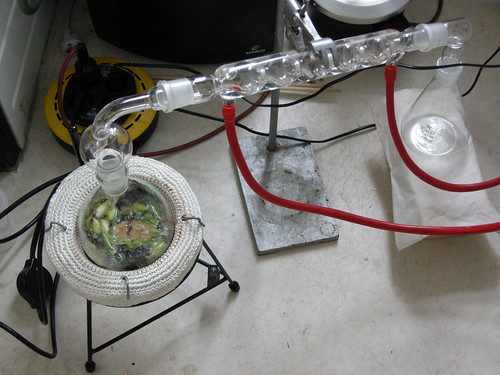
Each smell symbolizes how Japanese society expect women to be. All the essences are manually extracted from the natural (raw) materials with distillation method or alcohol extraction method by the artist.
ACCOMPANYING TEXTS
No. 1 Nukamiso
– the scent of motherhood –
There is an expression about housewives in Japanese: “A woman that stinks like Nukamiso”. It’s an expression for the women who are so much stuck in the family life that they are not attractive as women anymore.
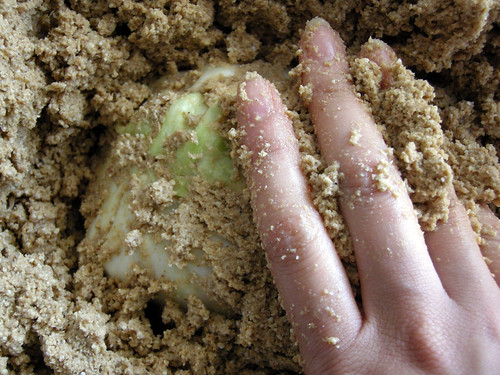
Nukamiso is salted rice-bran paste for making pickles. Every family used to have a bucket that looks like a sauerkraut barrel. The Nukamiso paste needs daily maintenance. Therefore the hands of the housewives used to stink pretty sour like Nukamiso . Mentioning such a smell was used as a metaphor for insulting housewives.
But that is slowly becoming the past. Nowadays, Nukazuke became something to buy at the supermarket, so no woman knows anymore how to make Nukazuke at home. In the near future women that stink like Nukamiso would not be seen with the traditional sense, but would be recognized as super feminine and sexy women! Don’t be too late. When you serve Nukazuke to your husband, make sure that you spray this perfume on your hands, so that he thinks that you’ve made it yourself. This is the eternal scent for motherhood.
(It’s a pickling paste made with rice bran. It smells like ‘zaurkraut’. I used alcohol to extract the smell.)
No. 2 Tatami
– the scent of freshness as new tatami
A Japanese proverb says: “Wives and tatami’s are better when they are new.”
Tatami is the traditional Japanese carpet and floor woven from rush. The traditional house is made with tatami and shoji (rice paper doors and windows). New tatami is always preferred because it’s clean and also giving the fresh and comforting smell of rush. However the smell disappears as time goes by. That has become a metaphor for a wife.
You would question: is it only a wife that is better when it’s fresh? How about a husband then? Let’s leave that question aside for a moment. If you want to feel fresher and younger as a woman, this perfume is ideal for you. It’s the perfume for any generations.
* Most of the Japanese women give up their jobs and become pure housewives when they get married or when they get children.
(Japanese people make hard carpet with weaving this grass. The whole floor of Japanese house is made with this mat, so it’s an important substance of Japanese house-smell. I used alcohol to extract the smell.)
No. 3 Miso Soup
– the scent of a woman in the kitchen –
A happy morning is to wake up with the sound of the kitchen and the smell of miso soup – that’s the traditional image of a family. Japanese people eat a warm meal in the morning. Perhaps it has already become the past.
If you want to wake up your family with such an elegance, this perfume can help you. This Miso Soup Perfume can be used as a room spray. The family will wake up with the happiness resulting from the smell of Miso Soup.
This perfume is also useful for fooling the nose of your husband, in case you want to pretend that you’ve been working all day in the kitchen.
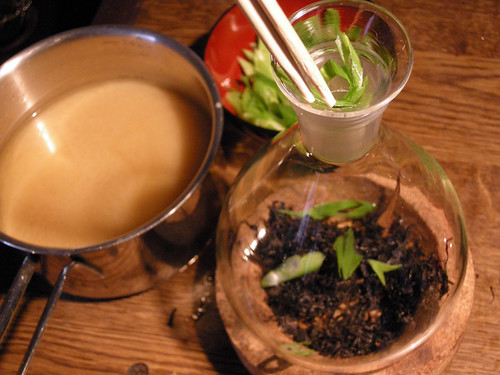
(It’s a national soup made with miso, a fermented soy bean paste. I made the soup in the flask and extracted the smell with water distillation method.)
No. 4 Soap
– the scent of pureness and cleanness –
One of the most important morning rituals for Japanese high school girls is to wash their hair just to scent the hair with the smell of shampoo. If you don’t have time to take a shower in the morning, you can scent your hair and your body with this perfume: the smell of the soap.
Japanese men prefer women that represent pureness and cleanness. Don’t worry if you aren’t. This perfume will also emphasize the attractive contrast in yourself.
* Japanese people like the smell of soap very much. Women often purchase perfumes that smell like a soap.
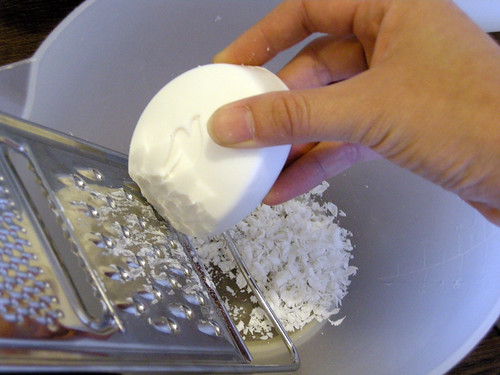
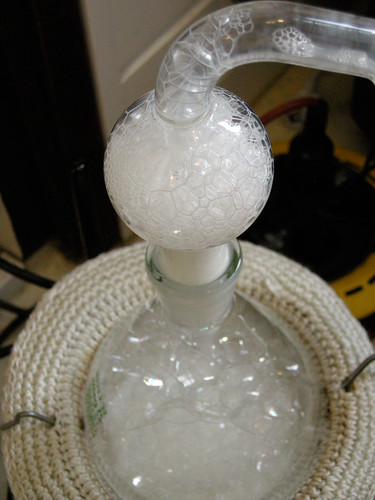
(I scraped a soap and extracted the smell with water distillation method.)