OLFACTOSCAPE VER. 3

– Deconstructing a Rose –

installation (2019)
DATE: 12.10.2019. – 08.12.2019.
VENUE:
Kiyosu City Haruhi Art Museum (premier) http://www.museum-kiyosu.jp/ 
CONTEXT: Olfactory Labyrinth Exhibition (solo exhibition)
CURATOR: Nana FUJIMOTO
ADS_0120

ADS_0116

UNADJUSTEDNONRAW_thumb_1ac28

ADS_0122

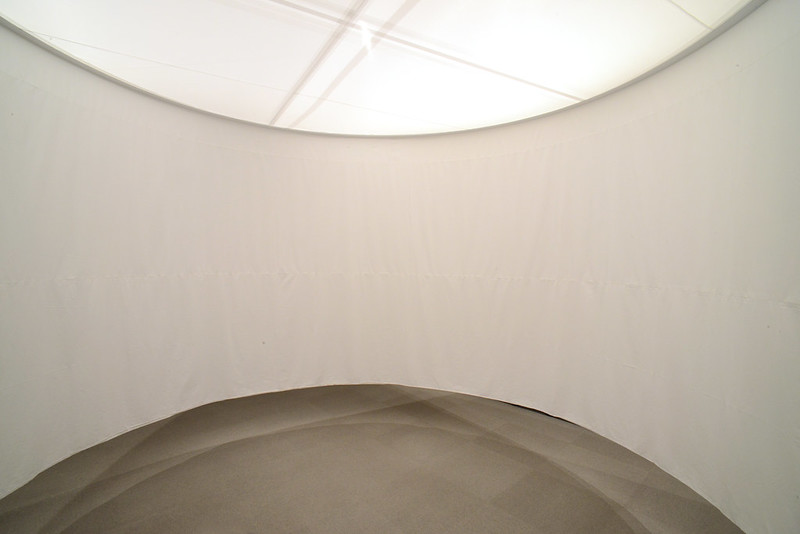
OLFACTOSCAPE is a series of works researching scent-driven space exploration with the focus on how scents mix in the air. How do fragrances travel in space, how do they mix, what can we distinguish and what not?


[Experience]


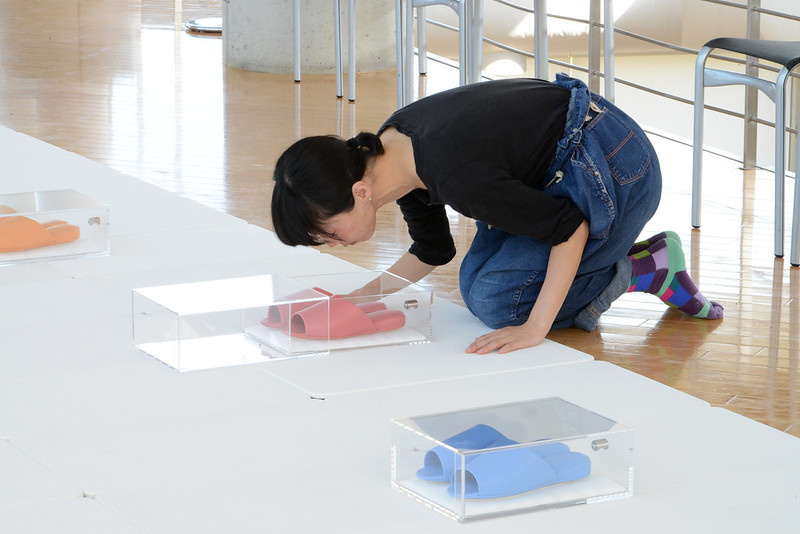
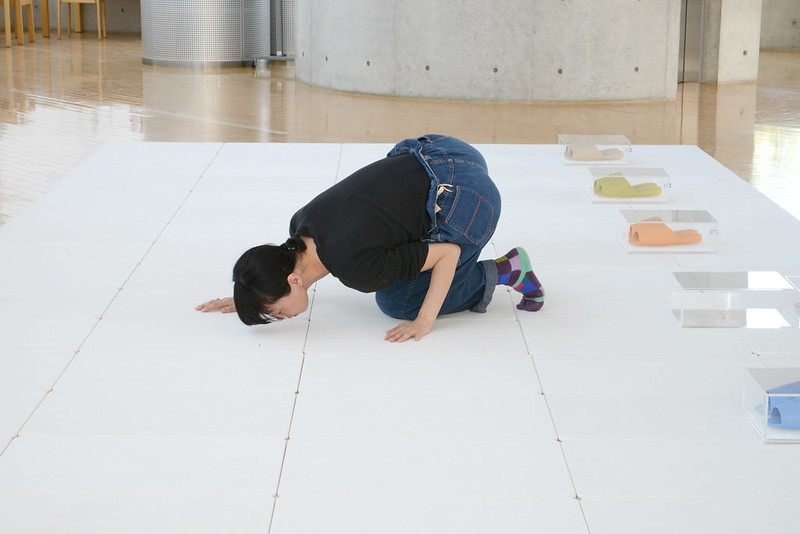
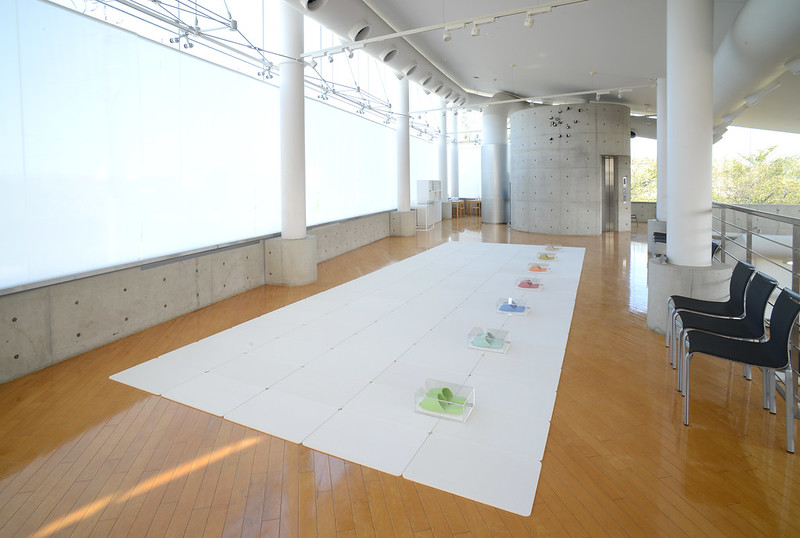
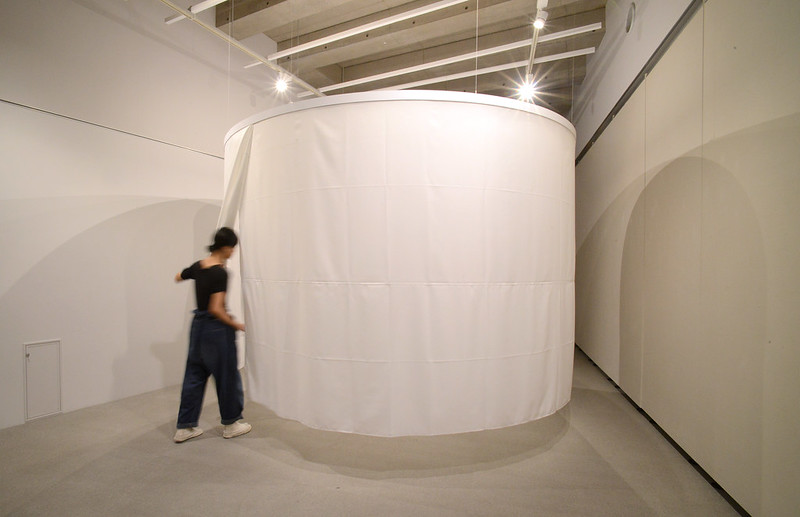
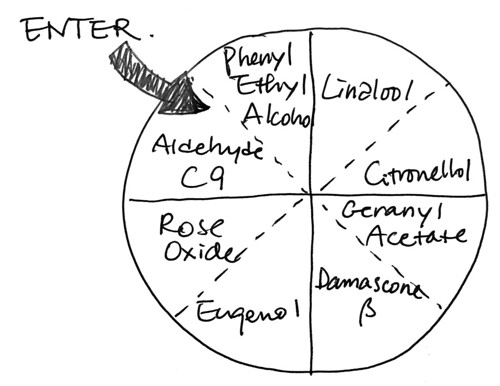
A cylindrically shaped space is made to create a distinct space, safe enough to close your eyes and focus on smelling. As you walk along the circular curtain, new scents appears one by one:


  1. Phenyl Ethyl Alcohol
  2. Linalool

  3. Citronelllol
  4. Geranyl Acetate
  5. 
Damascone Beta
  6. Eugenol
  7. Rose Oxide
  8. 
Aldehyde C9
Scannable の文書 (2019-11-29 14_49_32)


The scent of the rose flower consists of hundreds of chemical components. The eight components above are the most relevant ones. When you stand in the middle, what you smell is the mixture of them: the scent of rose flower. When moving closer to the curtain you “zoom in” to the individual components.


In comparison to music, the single scent is like “note” and the total scent is like “harmony”.


[Story]


The work prior to this work is “DECONSTRUCTING CHANEL NO.5”, with a prototype to proof the concept in 2012. This work is hardly shown public because of trademark issues.  


This new work, “DECONSTRUCTING A ROSE”, inherits the same principle of that work. I chose the scent of rose as a theme, because it’s universal, being loved in any culture beyond gender and generation. The scent of rose is the perfect concept for education, because there are a lot of different versions of this scent on the market.

[Technical Prouction]


The fact that scents mix in the air makes it difficult for us to control them in olfactory art. However, it is this behavior that became a challenge for me and an important inspiration for making my work.


The level of intensity and the speed of vaporizing are controlled by calibrating the solvent for each scent.  For example, Aldehyde C9 is long lasting, so I diluted it and used a vapor-accelerating solvent. 


OLFACTORY PROPRIOCEPTION

– Passport to Ishigaki Island –

installation (2019)

DATE: Apr. 24th, 2019 (premier)- May 19th, 2019
VENUE: Ishigaki City Center for Culture, Ishigaki Japan (solo exhibition)
CURATOR: Tomohiro OKADA (Blue Ocean Foundation / Shimanova)
IMG_5184_補正7

IMG_5190

[Experience]

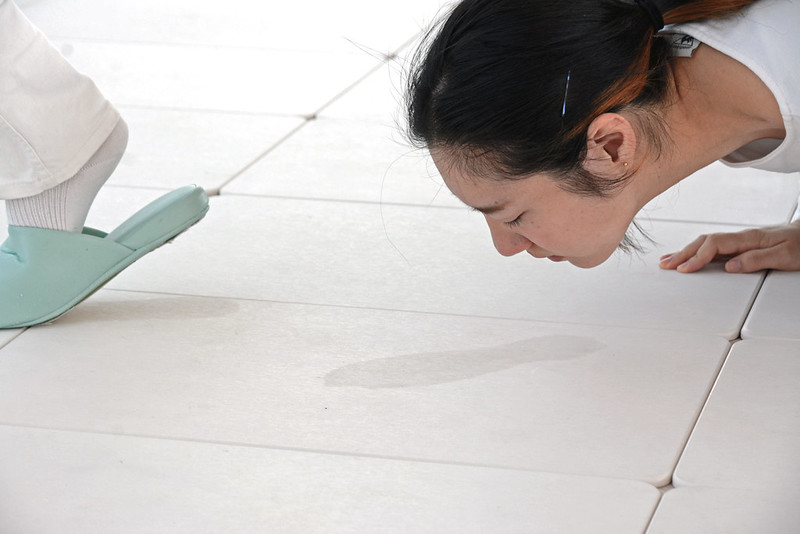
How do you smell, when you lay down? Is it different from how we normally smell: sitting or standing?

In this work you lay down in a private dark space, let your body release and relax, and smell.  The parasympathetic nervous system becomes active then, and consequently you would smell the scent differently than you do in the normal context where the sympathetic nervous system is active.  You are ‘in’ the scent, drown, or completely immersed.  


What you smell here is the scent of night flowers. Do you smell it consciously or unconsciously?

[Story]

Ishigaki Island, where I live, is a fragrant island.  During the hot and humid summer nights we often smell the night flowers in bed as if it is “a perfume of the night”.  It comes up in mind but also disappears quickly, and it repeats. We go back and forth conscious and unconscious smelling.  I have taken this experience and shaped it in the form of this installation. 


When we smell in a western or city context, scent (or fragrance) is something special.  For us in the rural area here, scent is something always there, we take it for granted and not that special. Cities are the consumers of fragrances, but rural areas are the producer.  People here do not wear fragrances, because it’s surrounded by the natural scents of the environment. How people appreciate scents here became an inspiration for this work.

[Technical Production]

I have used self-extracted Silk Jasmine, a common plant here, and added a touch of fragrance I composed, as booster and fixative.  The scent is impregnated in the paper petals.


IMG_5155

IMG_5474_補正1

 [Research]

It is a research of a biome* from olfactory perspective, and also how people interact with the biome with the olfactory sense. 

*“A biome is a community of plants and animals that have common characteristics for the environment they exist in. Biomes are distinct biological communities that have formed in response to a shared physical climate.” – wikipedia

I have been extracting various plants of the island, and found out that there were common substances present in the extracts.  They were exhibited next to this installation.

For example, we have a lot of night blooming flowers, and they always have hidroxycitronellal type of substances in common. It must be for attracting moths and to get more chance of pollination. Spicy and citrus aspects are often found in leaves, and it must be for surviving in this extremely hot and humid summer here. (Camphoraseus substances as 1,8 cineol, often found in the cold climate area, were less found here – probably it’s too hot for such substances.)

List of raw extracts exhibited (self made)
1. Camphor
2. Shell Ginger Flower
3. Taiwan sugar palm
4. Gardenia
5. Barringtonia
6. Water Lily
7. Ryukyu Pine Tree
8. Vetiver

OLFACTORY LABYRINTH VER. 4

Find the Spot for Ohanami

space installation (2018)
DATE: June 4 to October 21, 2018
VENUE: Japan House Sao Paulo (premier)
CURATOR: Felipe RIEBENBOOM
SUPPORT: Takasago
JAPAN HOUSE Sao Paulo - fotos  de Rogério Cassimiro (4)

JAPAN HOUSE Sao Paulo - fotos  de Rogério Cassimiro (5)

JAPAN HOUSE Sao Paulo - fotos  de Rogério Cassimiro (6)

[Experience]

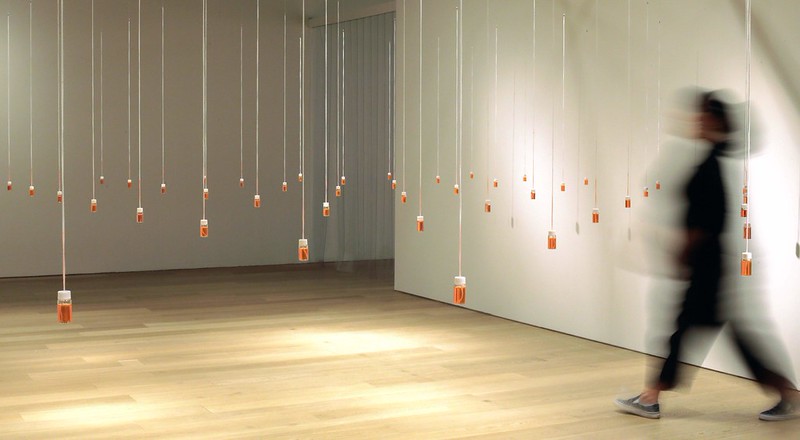
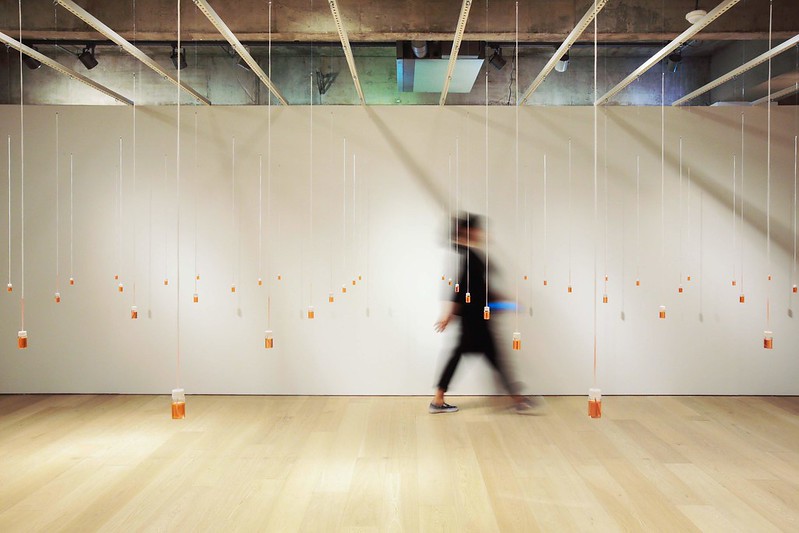
This is the 4th version of my Olfactory Labyrinth Series, exploring space, movement and olfaction started in 2013. It is a maze with a metaphor of ohanami.

Ohanami is the Japanese traditional custom of picnic party for enjoying cherry blossoms in early spring. “Find the best spot for ohanami, with the sense of smell”, is the assignment to the audience. As you get closer to the invisible sakura (cherry blossoms) trees, it smells stronger.

[Technical Production]

IMG_1543

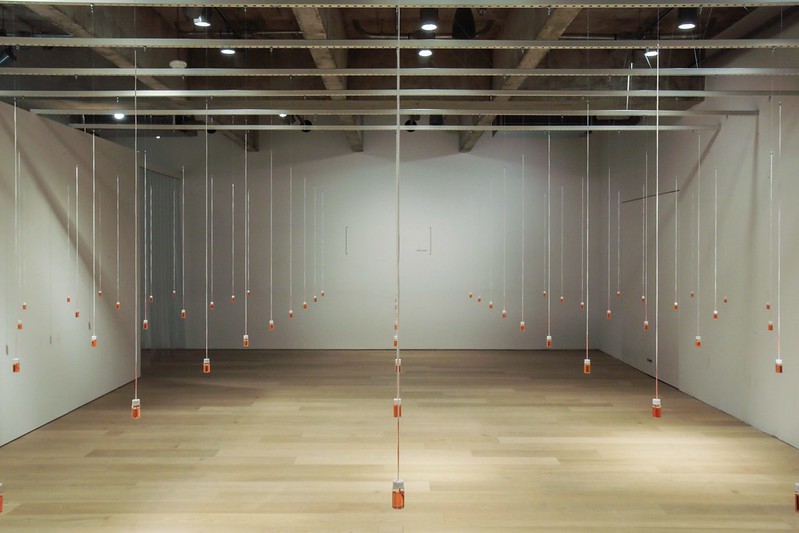
There are 81 bottles hanging from the ceiling in the grid of 9×9. Each bottle contains fragrant oil. The candle rope by which it hangs from the ceiling gradually absorbs the oil and spreads the scent around the space. The oil is just strong enough to be smelled from 35 cm distance. Each grid is thus 70 cm, just wide enough for a person to walk through while smelling. In order to make it possible, the solvent is carefully calibrated as follows: ethanol 80% (emitting property) / propylene glycol 20% (fixative property) .

This version is inspired by The Weber-Fechner Law on psychophysics: the logarithmic relation between the actual change in a physical stimulus and the perceived change. The concentration increases in 3 steps in multiple of 33, as a result of many experimentations: (1) 10.00% (2) 0.33% (3) 0.01% (4) 0.00%

The fragrance sakura is composed by myself as well. I tried to resemble it to the blossoms in the night, which emits very soft and powdery scent in silence.

The last step of the development is composition of colors. The higher concentration has darker color, so there needs color adjustment by each concentration, in order to mask the concentration visually.

JAPAN HOUSE Sao Paulo - fotos  de Rogério Cassimiro (15)

JAPAN HOUSE Sao Paulo - fotos  de Rogério Cassimiro (2)

JAPAN HOUSE Sao Paulo - fotos  de Rogério Cassimiro (3)