TANGIBLE SCENTS

– COMPOSITION OF ROSE IN THE AIR –

installation in open air (2018)
3

Tangible Scents is a finalist for the Art and Olfaction Sadakichi Award for Experimental Work with Scent. The Art and Olfaction Awards celebrate excellence in global independent and artisan perfumery, and experimental work with scent.

DATE: November 15th, 2018
CONTEXT: Reed Arts Week 2018
VENUE: Reed College, Portland, U.S.A 
CURATOR: Aersen Lease, artistic director for the Reed Arts Week

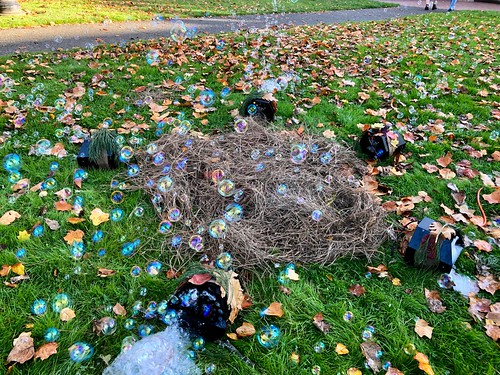
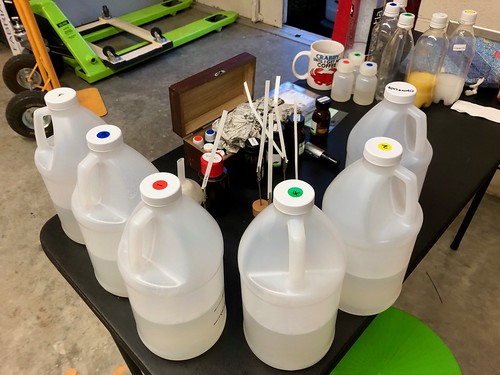
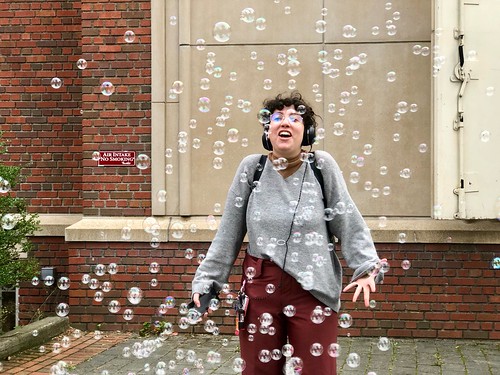
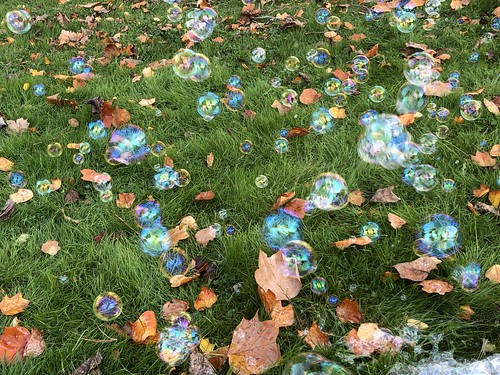
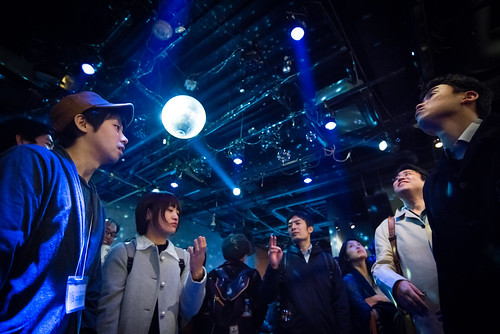
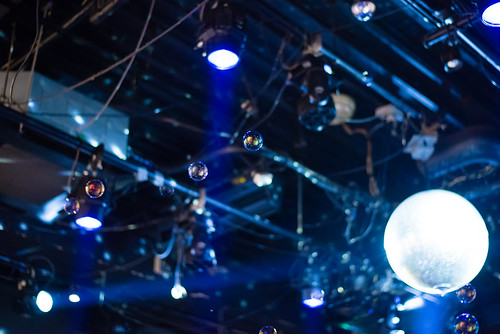
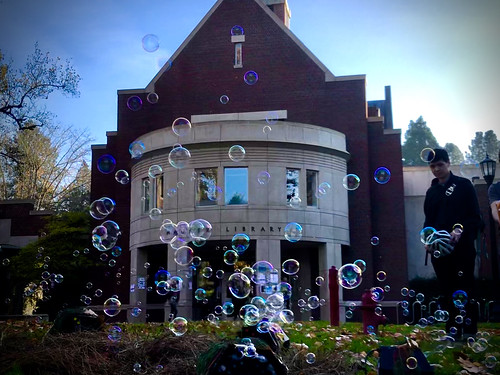
“Tangible Scents” is an open-air installation which uses Maki Ueda’s original method of “de-and re-construction in the air” to decode on the scent of rose. The five major components of the this scent are individually infused into vats of soap, which will each be poured into five different bubble machines. You can deconstruct rose into its component  scents by poking the bubbles, or immerse yourself in the total scent.
IMG_3381

IMG_3373

IMG_3294

IMG_3289

IMG_3367


IMG_3376

Since the late 2017 I’ve been questioning myself “how to make scents more tangible and understandable for audience?”.

I picked “rose” as a theme because it’s universal. There’s no “typical rose scent” but it’s very diverse, from the sweet one to the fresh one, and that fact tells us that “rose” is a concept.

I’ve been experimenting with different medium as candle, perfume, and soap bubbles on this theme. The form of incident varies from workshop to installation.

Tangible Scents is an installation in open air, created as a result of such experimentations. My method here is “de-and re-construction of the scent of rose“. By deconstructing the rose scent in components and then reconstructing them together in the air, its concept becomes more transparent and tangible for the audience.

Five scents (molecules), the major components of the scent of rose, are impregnated to soap bubble independently.

Used Scents:

  • (1)Phenyl Ethyl Alcohol (fresh, sweet, floral, sake-like)
  • (2)Geraniol (fresh, watery, citrusy)
  • (3)Phenyl Acetic Acid (sour, floral)
  • (4)Rose Oxide (fresh, metalic)
  • (5)Aldehyde C9 (fatty, green, cucumber-like)

They are to be diffused with the machines independently.

– By the mixing nature of scent molecules, the field of “the smell of rose” is created, as if the composition is done in the space.

– By being poked, a bubble breaks, and it emits the scent. – You can clearly identify the scent, because the five scents are quite different.

– You can also immerse yourself in the flow of bubbles and just feel the rose.

– You can zoom-in and out with the olfaction.

– Timing is controlled with remote controllers.

– Concentration is adjusted by each scent.

Key words:

– tangible scents

– composition in the space

– immersive olfactory experience

– zoom-in and out with olfaction – de- and reconstruction of the scent of rose

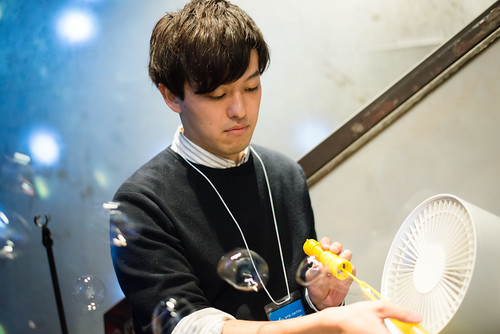
EXPERIMENT 1: MINI PERFORMANCE

DATE: November  2017
ORGANIZER: Nozomi Shirai / KYO-SHITSU https://www.ranagram.com/kyo-shitsu/
VENUE: WOMB TOKYO

Used Scents:

(1) Phenyl Ethyl Alcohol

(2) Citronellol
womb_0306_37960352185_o

WOMB_0308

WOMB_0313

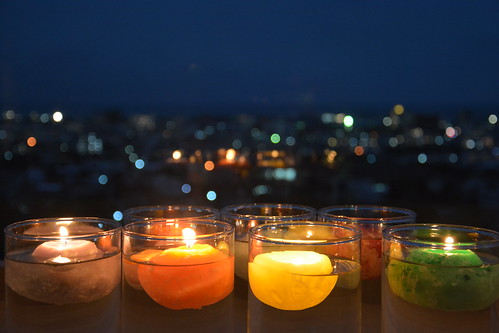
EXPERIMENT 2: CANDLE INSTALLATION 

DSC_3626

DATE: November  2017
VENUE: ART HOTEL ISHIGAKI / BAR CAPRICORN
CURATOR: Tomoko Takamine
EXHIBITION TITLE: DECONSTRUCTING AND CONSTRUCTING THE SMELL  “X”

Used Scents:

(1) phenyl ethyl alcohol / PINK 

(2) geraniol / TURQUOISE BLUE 

(3) citronellol / YELLOW  

(4) linalool / ORANGE 

(5) euginol / PURPLE

(6) rose oxide / WINE RED 

(7) aldehyde C9 / GREEN 

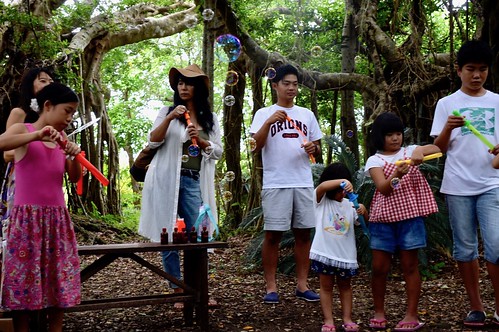
EXPERIMENT 3: WORKSHOP
IMG_0153


DATE: August  2018
VENUE: Yachimun-kan, Ishigaki Isl.
ORGANIZER: Hitoshi Watanabe (NPO Shima-no-Youchien)

Used Scents:

(1) phenyl ethyl alcohol 

(2) citronellol 

(3) linalool 

(4) rose oxide 

(5) aldehyde C9
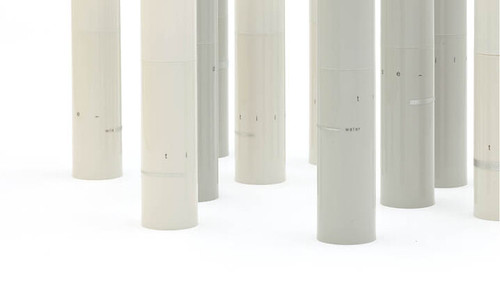
_TILDE

inframince.inc | t i l d e _

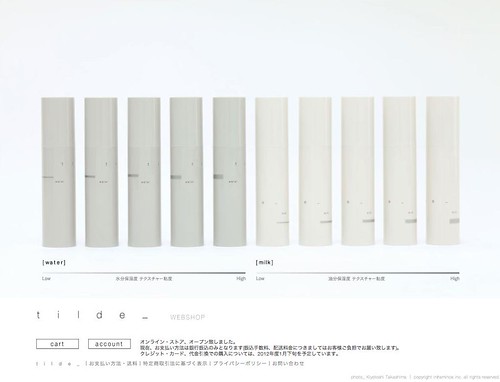
Collaboration with inframance, inc.  Five different textures of tonic and milk offer the users sensitivities for skin and touch. 


perfume _ tilde_

An olfactory artist Maki Ueda developed for the fragrance of [tilde_] with the image of “skin tone”.  It is not too sweet, somewhat dear, and transparent. In the old Japanese language, there was no clear division in expressions for the color and the smell.  For example the word “niou (fragrant)” meant not only smelling nice, but also meant that the color of “beni” looks vibrant. (The color is in between red, pink and orange). There is a perfect example in the oldest poem book “Manyoshu” edited more than 1000 years ago.  The poem is about the beauty of a woman who is standing under a peach tree.  The pink color of the blossoms is reflected on the chin of the woman.  He says that the skin color of her chin is “niou (fragrant)”.   Such unique Japanese sensitivity, somewhat synesthetic, became the starting point for the “skin tone scent”. 

 
DT11_web_inframince1


 inframince.inc (http://inframince.jp)

 Maki Ueda (http://www.ueda.nl/)


tilde_photo


SUKEBENINGEN

Sukebeningen Official WebsiteL: http://sukebeningen.org

What is Sukebeningen Project?

The project presents inter media art of characteristically Japanese eroticism. We explore the cultural differences in the conception of eroticism between The Netherlands and Japan through music, dance, electronics, fine arts, and olfactory art.

The name “Sukebeningen”

The name of the project “Sukebeningen” comes from the beach Scheveningen in Den Haag, The Netherlands. Japanese pronounce the word “Scheveningen” /sukebeningen/. The word “sukebe” means somethig like “lecherous” or “naughty,” and “ningen” means human being. So “Sukebeningen” means a naughty person. In Japan, therefore, Scheveningen is well-known as a beach with a funny-sounding name. One might say the name is ambiguous: for Dutch, it refers to the beautiful beach; for Japanese, it refers to a naught person. For both peoples, the name of the project is very familiar.

Why eroticism?

One’s conception of eroticism reveals his or her sexual sensitivity at a very personal level. At the same time, eroticism reflects the taste of a people at the cultural level. Indeed, eroticism is an important aspect of the cultural aesthetics. Everyone is interested in eroticism, and how different cultures conceive of it. But, it is also a sensitive topic, and it can be difficult to talk about it. We want people to enjoy our works personally and casually, although at the same time we deal with eroticism honestly and seriously.

About the Works

(1) The Tattooer 

The Tattooer is based on the beautiful sado-masochistic tale by Junichiro Tanizaki. In the piece, Tanizaki€™s world is crystalized using carefully selected materials from the story.

About the scents; The first scent: Jinko, an aphrodisiac incense that used to be diffused permanently in the Japanese red light district in the old days. It symbolizes ecstasy. The second scent: Shoko, an incense that is employed in Buddhist ceremonies and funerals. It symbolizes death.

Video directed by Kaname Onoyama.

electronics and composition : Yota Morimoto

composition and violin : Noriko Koide

supervision : Akane Takada

dance : Chiaki Horita

olfactory art : Maki Ueda

tattoo : Yuki Hatazawa

percussion : Ryoko Imai

(2) Moon

The concept of the work is an installation of kehai, a Japanese word which means ‘a vague sense of the presence of something.’ When one perceives or becomes aware of an indication that somebody/something exists around him/her, many faculties of senses contribute to pick up that. We created a dance piece in which multi-sensorial experience is explored. The auditorium is in complete darkness, suppressing the sense of sight, and making other modalities more sensitive. The seats in the auditorium are arranged with intervals, through which the dancer will dance, keeping an intimate proximity to the audience. They will be able to feel the kehai of the dancer. In addition, She wears a perfume, developed by the olfactory artist, to emphasize her kehai (where she is, and what she does in the dark).

About the scent; the scent of a flower that blooms at night to attract moths.

Video directed by Kaname Onoyama.

electronics and composition: Yota Morimoto

composition : Noriko Koide

supervision : Akane Takada

dance : Chiaki Horita

olfactory art : Maki Ueda

 
(3) Shijuhatte

 Shijuhatte, refers to the catalogue of 48 erotic positions partners can take during the course of making love, as depicted in shunga (Japanese old erotic picture). Each position has a poetic name, giving us the impression of the rich imagination of the people in the Edo period. The choreography is based on these 48 positions, and the music is based on the sound that was actually heard in yukaku (Japanese red light district) where yujyo (the women who work in yukaku) were. Besides an amplified mini-koto and some small percussions and toys which are strongly associated with yujyo, we also developed a switch that triggers various sound effects. In addition, we’ve put elements of Ozashiki-Asobi (game or play with yujyo in yukaku), presenting the sophisticated culture that enjoy communication with yujyo though the games and plays more than sex itself back in that period.

About the scent; the scent of cherry blossom.

Video directed by Kaname Onoyama.

electronics : Yota Morimoto

composition : Noriko Koide

mini-koto : Akane Takada

dance : Chiaki Horita

olfactory art : Maki Ueda

percussion : Ryoko Imai