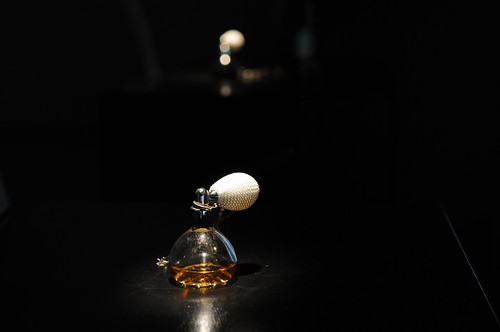
eau de parfum PERFECT JAPANESE WOMAN

– a perfume art for filling imaginations for a perfect Japanese woman –

perfume artwork, installation (2008)

CONCEPT

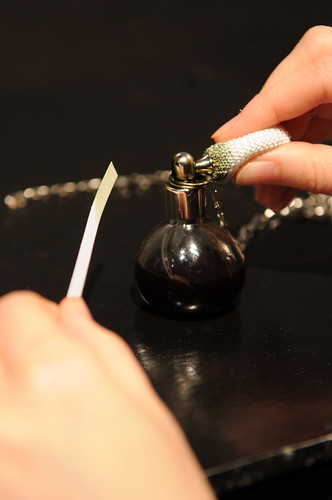
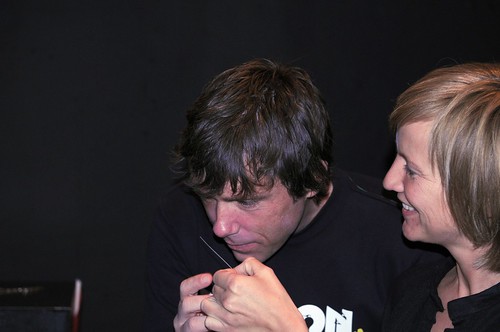
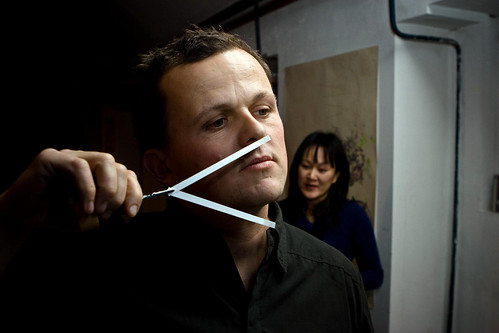
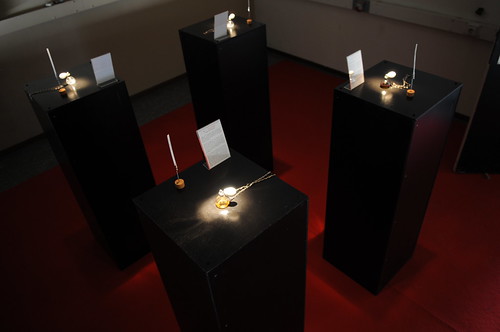
This artwork consists of 4 fragrances.  Like in a perfume shop, you are free to spray them on the paper strips, smell them, and even to wear them.  After spraying, please allow 20 seconds until alcohol vaporizes completely, then enjoy the smell.

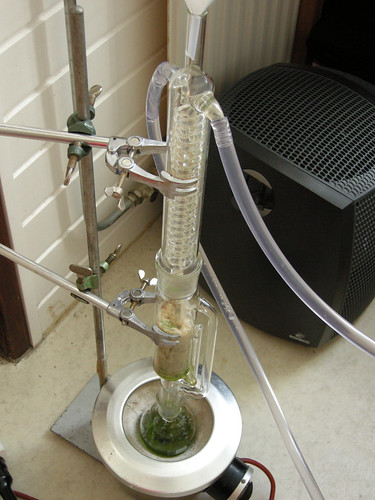
Each smell symbolizes how Japanese society expect women to be.  All the essences are manually extracted from the natural (raw) materials with distillation method or alcohol extraction method by the artist.
DSC_2062

DSC_2070

DSC_0990

DSC_1021

ACCOMPANYING TEXTS

No. 1  Nukamiso

– the scent of motherhood –

There is an expression about housewives in Japanese: “A woman that stinks like Nukamiso”.  It’s an expression for the women who are so much stuck in the family life that they are not attractive as women anymore.

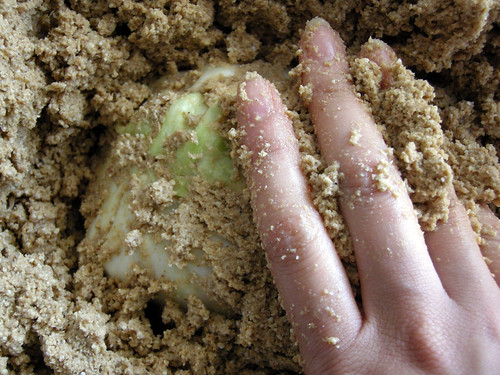
Nukamiso is salted rice-bran paste for making pickles.  Every family used to have a bucket that looks like a sauerkraut barrel.  The Nukamiso paste needs daily maintenance.  Therefore the hands of the housewives used to stink pretty sour like Nukamiso .  Mentioning such a smell was used as a metaphor for insulting housewives.

But that is slowly becoming the past.  Nowadays, Nukazuke became something to buy at the supermarket, so no woman knows anymore how to make Nukazuke at home.  In the near future women that stink like Nukamiso would not be seen with the traditional sense, but would be recognized as super feminine and sexy women!  Don’t be too late.  When you serve Nukazuke to your husband, make sure that you spray this perfume on your hands, so that he thinks that you’ve made it yourself.  This is the eternal scent for motherhood.
DSCN5711
DSCN5712

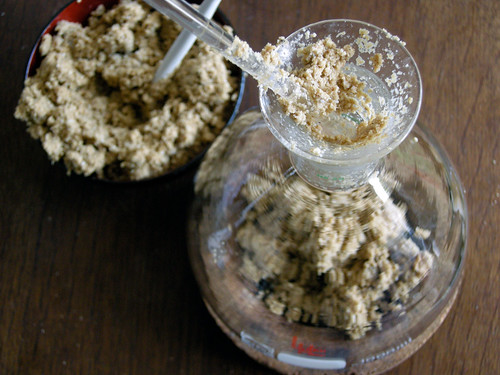
(It’s a pickling paste made with rice bran. It smells like ‘zaurkraut’. I used alcohol to extract the smell.)

No. 2  Tatami

– the scent of freshness as new tatami

A Japanese proverb says: “Wives and tatami’s are better when they are new.”

Tatami is the traditional  Japanese carpet and floor woven from rush.  The traditional house is made with tatami and shoji (rice paper doors and windows).  New tatami is always preferred because it’s clean and also giving the fresh and comforting smell of rush.  However the smell disappears as time goes by.  That has become a metaphor for a wife.

You would question: is it only a wife that is better when it’s fresh?  How about a husband then?   Let’s leave that question aside for a moment.  If you want to feel fresher and younger as a woman, this perfume is ideal for you.  It’s the perfume for any generations.

* Most of the Japanese women give up their jobs and become pure housewives when they get married or when they get children.

DSCN5481

DSCN5482

(Japanese people make hard carpet with weaving this grass. The whole floor of Japanese house is made with this mat, so it’s an important substance of Japanese house-smell. I used alcohol to extract the smell.)

No. 3  Miso Soup

– the scent of a woman in the kitchen –

A happy morning is to wake up with the sound of the kitchen and the smell of miso soup – that’s the traditional image of a family.  Japanese people eat a warm meal in the morning.  Perhaps it has already become the past.

If you want to wake up your family with such an elegance, this perfume can help you.  This Miso Soup Perfume can be used as a room spray.  The family will wake up with the happiness resulting from the smell of Miso Soup.

This perfume is also useful for fooling the nose of your husband, in case you want to pretend that you’ve been working all day in the kitchen.
DSCN5684

DSCN5685

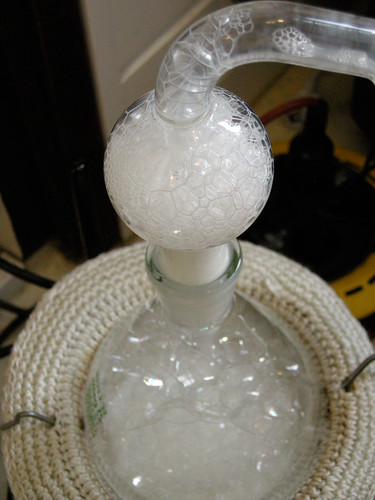
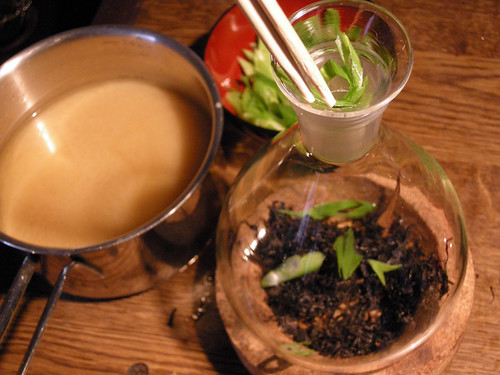
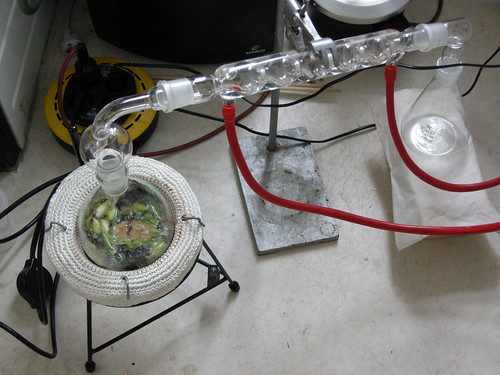
(It’s a national soup made with miso, a fermented soy bean paste. I made the soup in the flask and extracted the smell with water distillation method.)

No. 4  Soap

– the scent of pureness and cleanness –

One of the most important morning rituals for  Japanese high school girls is to wash their hair just to scent the hair with the smell of shampoo.  If you don’t have time to take a shower in the morning, you can scent your hair and your body with this perfume:  the smell of the soap.

Japanese men prefer women that represent pureness and cleanness.  Don’t worry if you aren’t.  This perfume will also emphasize the attractive contrast in yourself.

* Japanese people like the smell of soap very much.  Women often purchase perfumes that smell like a soap.
DSCN5692

DSCN5705

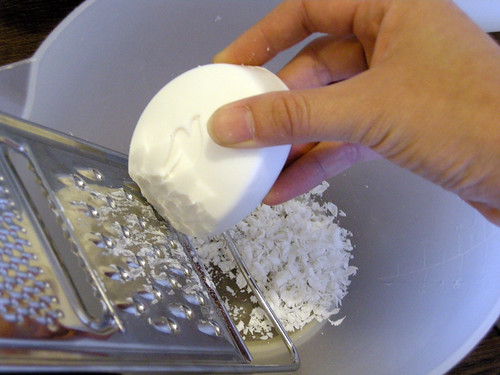
(I scraped a soap and extracted the smell with water distillation method.)

OTHER EXHIBITIONS

Gallery Roodkapje, Rotterdam (PREMIER), 09.2008.

Dutch Design Week, Eindhoven, 17-25.10.2009.

World Technology Network Award, New York, 07.2009.

Artists Summit Kyoto, Japan, 12.2009.

Aesthetic of Olfactory Art Conference, Japan Foundation, 05.2015

CREDITS

CURATOR: Camera Japan Festival 2008
EDIBLE PERFUME

– extraction & composition of flavours –

workshop (2008)


12

Food pairing, a widely accepted concept in the molecular gastronomy scene, explores the potential of unacquainted food combinations – grapefruit with cardamon, carrot and bitter orange peel – to create new tasting experiences.

Maki Ueda developed her own mysterious ways of extracting smells from raw materials in a kitchen environment throughout her career. As artist in residence at FoAM, she was challenged to share her fascination in a hands-on workshop focusing both on smell and taste. Could both ways of sensing be combined with the art of composition in perfumery, the art of finding the right matches and balancing between hundreds of aromatic ingredients?

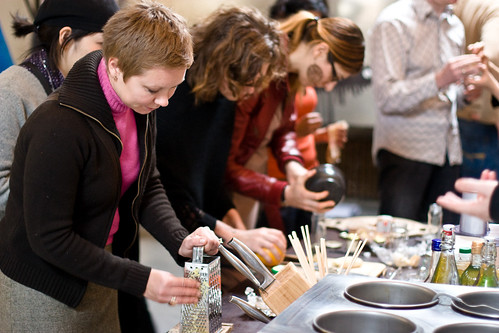
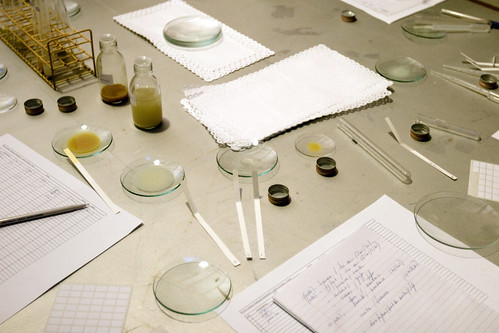
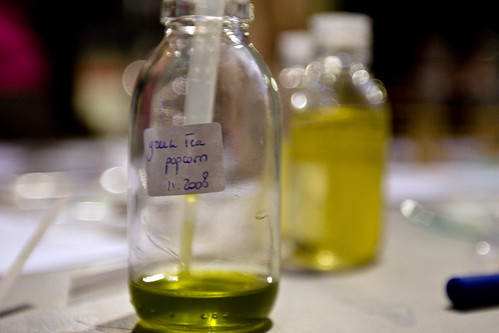
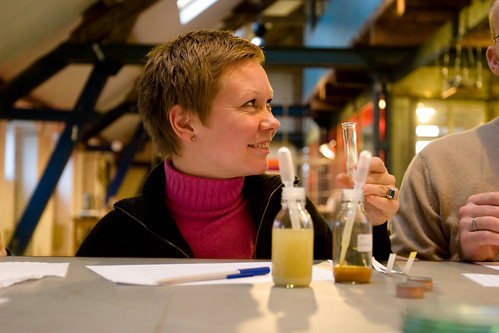
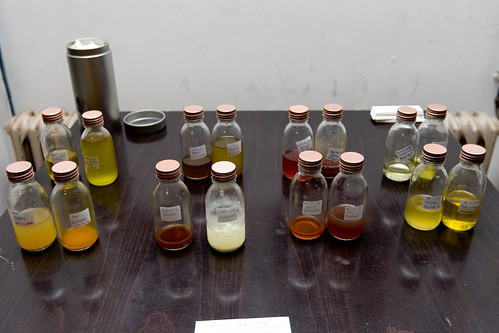
A natural smell is often extracted from a material using chemistry techniques for retrieving essential oils, such as distillation, ethanol extraction, or oil maceration. For the Edible Perfume workshop, these techniques were adopted in the kitchen. In a temporary laboratory setup, the participants experienced the complete process of extracting aromas and flavours from edible raw ingredients, in order to recompose them into new culinary substances.

Every participant was asked to bring two edible materials: a ‘he’ and a ‘she’ as part of a food couple. Each material was to be extracted separately and then mixed together into one edible perfume. The challenge for the participants was to find the right balance of the two elements , giving birth to complex and surprising scents; the children of the ‘he’ and ‘she’ ingredients.

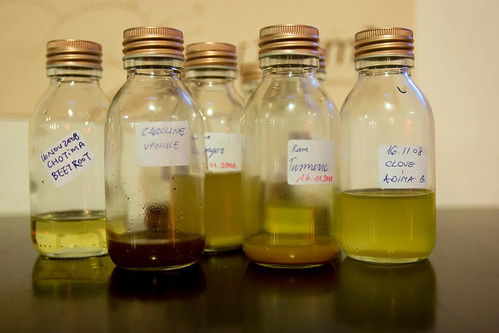
The following food couplings were created during the workshop:

  • almond & grapefruit 
  • cardamom & orange 
  • vanilla & parmesan 
  • star anise & banana 
  • clove & mandarin 
  • ginger & turmeric.

The participants have witnessed the process in which the aromas get separated from the tissues of the materials and absorbed in the medium. The result was evaluated both by smelling and tasting.A lively discussion ensued – where does our sense of taste and flavour originate; what is this mysterious area linking the cavities of our noses and mouths that can sense such subtleties of aromas and flavours? The group agreed that he sensation of edible perfume created was neither taste, nor smell alone, butsomething ephemeral, an experience in-between the senses.


EXTRACTION

01

07

06

03

02


COMPOSITION (FLAVOUR COUPLING)

10

08

11

04

05

TASTING

09

14

13jpg

DO IT YOURSELF – 5 STEPS

1. Process the material and make it as fine as possible

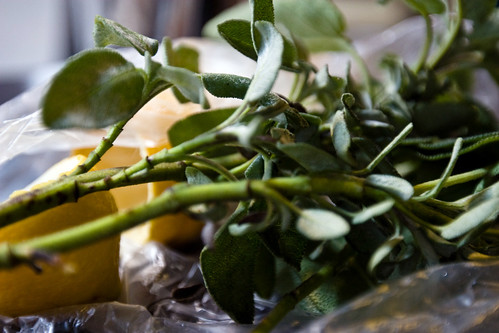
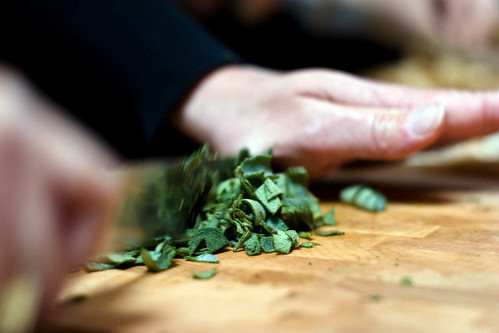
Use whatever tool you can find in a kitchen to peel, crush, shred or cut the ingredients into the smallest possible particles. The smaller the particles, the shorter the extraction time.

2. Choose the right medium and right temperature

There are different ways of extracting smells in general: such as distillation, hot/cold maceration, solvent extraction, enfleurage. The most appropriate technique to apply is hot / cold maceration, common for making garlic-flavoured olive oil. In order to make the extracts ‘edible’, 40% VOL vodka or non-flavoured, odor-neutral vegetable oil can be used as a medium. We used Grapeseed and soy oil. Vodka or oil can only extract a part of the whole bandwidth of smells that the ingredient contains.

Extracting temperature is another factor. Certain temperatures can extract certain bandwidths of smells, depending on the ingredient. Experimentation is the message!

3. Stuff it in a jar and heat it for 1 hour

Place your ingredient in a jar, pour vodka or oil over the material (not too much, just enough to cover the surface), close it half way and heat it au bain-marie, keeping 70 degrees Celsius. 70 degrees is the temperature where oil does not change its flavour and is just below the boiling point for vodka. (Use an electric hotplate for heating because vodka is flammeable.)

In case of citrus and orange – which cannot resist the heat – they should just be mildly shaken in the jar at room temperature. The time needed for extraction depends on the material, however 1 hour is generally more than enough to extract enough amount of smell molecules for your nose and tongue to detect.

4. Filter it

Use a coffee-filter. If the particles are too fine for the filter and cause clogging, rough cotton cloth could be used instead. Stirring can accelerate the process, but it can also introduce impurities in the resulting liquid, so the best thing is just to wait, time allowing.

5. Compose the smells

Should mix ratios be 1:9 or 4:6? There’s no universal answer, indication nor rule here. This is where your creativity comes into play. Use your nose and intuition to explore and experiment. To check the result, you can lick it, but smelling it from a paper perfume strip is the best, as smell molecules tend to linger around longer in your mouth than in your nose. If your nose gets confused, smell your own skin to refresh it.

You can enjoy the ‘edible perfume’ with bread, cracker, or oblaat. Toast!

NOTE: keep your lab well aired. In case you get nauseous, go for a walk in fresh air, and drink a glass of milk.

(edited by: FoAM)


REFERENCES

Food pairing:

http://www.foodpairing.be/

http://khymos.org/pairings.php


INFO FOR PARTICIPANTS

documentation by FoAM:

http://fo.am/edible_perfume

instructions for participants:

http://lib.fo.am/edible_perfume


DEVELOPMENT

For the documentations of its development and the workshops given all over the world :

http://scent-lab.blogspot.com/search/label/%5Bedible%20perfume%5D


CREDITS

concept, realization : Maki Ueda

production : FoAM Brussels

premier : Open Kitchen / Open Sauces