– シャネル5番の分解 –
世界初公開: V2_ Institute for Unstable Media(オランダ・ロッテルダム)www.v2.nl
日時:2012.03.15.
イベント名:Smell This!
V2のページ:OLFACTOSCAPE
ライブビデオの映像: http://player.v2.nl/embed/432/start/0/thumb/2821.24/
ロッテルダムのメディア・アート系スペース、V2_ にて嗅覚に関するアート・イベント Smell This! があり、デモンストレーターとして発表しました。
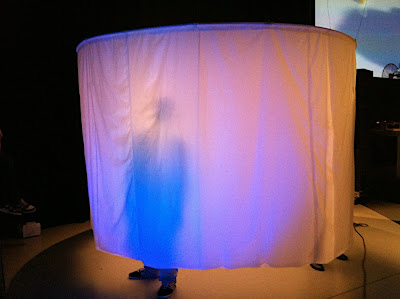
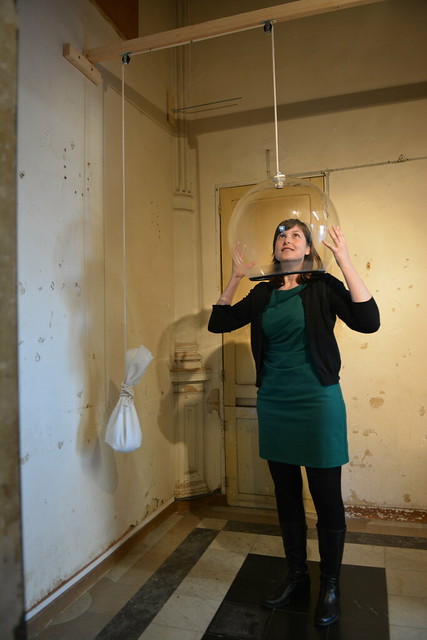
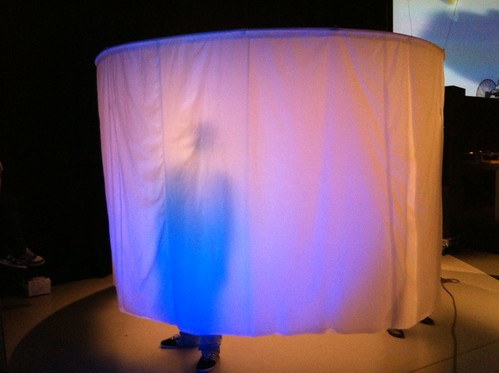
デモンストレーションとして展示したのが、OLFACTOSCAPE という2010年の作品。布で作られた直径3mの空間で、「空間における匂いのコンポジション」をテーマにしています。タイトルの” OLFACTOSCAPE” は、OLFACTO = 嗅覚、SCAPE = あるシーン、この2つの単語で作った造語です。
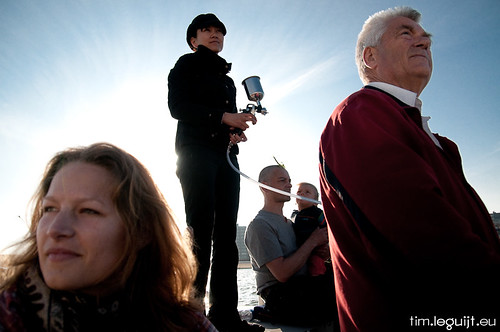
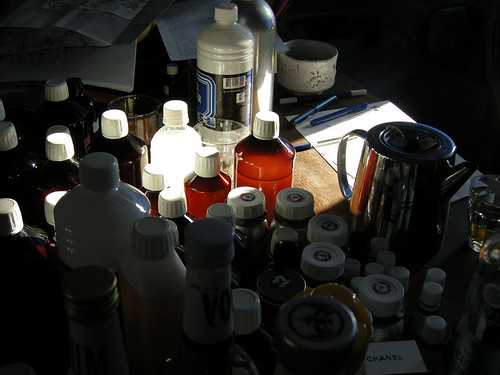
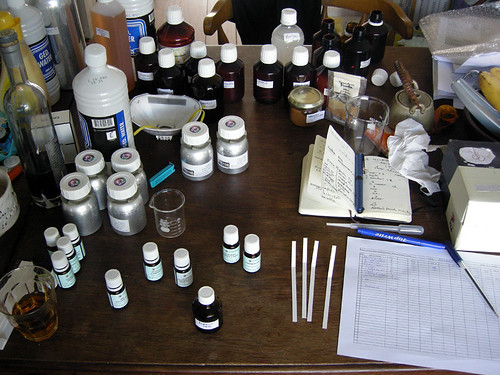
今回は、サブテーマとして、 deconstructing Chanel No. 5 を掲げました。直訳すると「シャネル5番の分解」。 円筒状のカーテンに、シャネル5番の重要コンポーネントを別々にぐるっとスプレーします。理論的に推論すれば、真ん中に立ったときに、「シャネル5番」のトータルな匂いが嗅げるはず。そして、カーテン沿いに歩けば単独の匂いが嗅げるはずです。音楽に例えれば、トータルな匂いが「ハーモニー」で、それを構成する単独の匂いが「トーン」です。そんなズーム・イン/アウト的な嗅覚体験を観客に楽しんでもらう、というインスタレーションです。
このアイディアは、初代バージョンのOLFACTOSCAPEを大阪で展示したときから抱いていました。そして、イベントに関するミーティングが2月上旬にあり、このアイディアをちょこっと話したところ、キュレーターが「それ、やるのにいくら必要?」と前のめりに・・・(笑)キュレータのハンサムで素敵な笑顔にすっかり口説かれてしまい、アイディアを検証するためのプルーフ・バージョンも作っていないのに、やることになってしまいました。
ワーク・イン・プログレスを見せる目的のイベントだったため、完成品ではなくてもよい。(時間もお金もかけられない。)けれども、観客にもある程度、きちんと体験してもらえるようなものを作ろう。そんな微妙な緊張感の中の制作となりました。
「あのシャネル5番を分解するんだってさ」という話題が話題を呼び、オランダの国民紙的な新聞にも掲載されてしまう始末です。作品はまだ「机上の空論」」だったのに・・・ (笑)ロッテルダムの他のトークイベントでもプレゼンをしました。地元色の濃いイベントなのに、唯一の東洋女性であるわたしは、明らかに異色・・・。
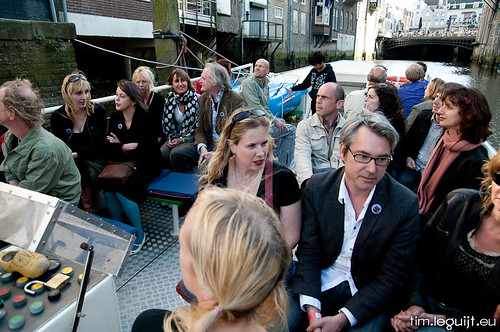
イベントでは3人のアーティストがプレゼンをしました。1人はベルリンから、1人はロンドンから来たアーティストです。私は日本人とはいえ、ジモティーでしたので、友達がみんな来てくれて、ちょっとしたパーティ状態。顔見知りばっかりでした。(実はこのイベントのオーガナイザーであるV2という団体には、学生時代の1998年から出入りしており、私はそのファミリーみたいな内輪の人間なのです。)
■デモンストレーション
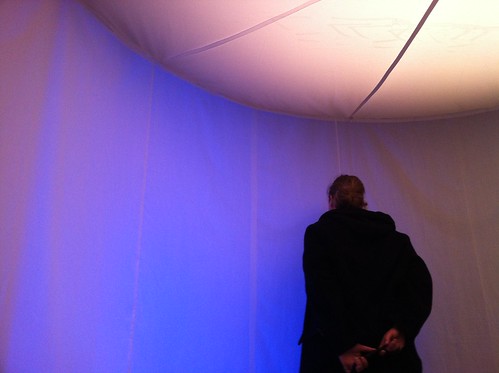
私はプレゼンで、作品の説明をするとともに、こう述べました。 「人間には2つの鼻の穴がついています。それは無意味についているわけではありません。犬のように、クンクンしてみると、けっこう匂いの発生源に行き着くのです。犬も、右に移動したり左に移動したりしながら、匂いの強度を探って、発生源に辿りつきます。鼻は耳にもちょっと似ていますね。ですが、それを体感する機会はありませんので、この空間で「嗅覚のステレオ体験」をしてみてください。この空間内ではぶつかるものは何もありませんので、安心して手を使って壁伝いに歩いてください。」 被験者に空間の中に入ってもらい、実際に壁伝いに歩いてもらいます。 「いま、ローズの匂いがしますよね。では右にちょっと移動してください。ミュゲの匂いがしてきます。しましたか? では、また左に戻ってください。そして、ローズと、ミュゲの匂いが均等に混ざる点を探してください。」
被験者は見事に、ふたつの匂いの「見えない境界線」を当てました。その境界線は、私にだけ見えるシークレットの境界線です。
「嗅覚と聴覚を比べてみましょう。聴覚の場合、音源から遠いほど音が小さく聞こえ、近づくにつれてその音量はきれいなグラデーションを描きます。しかし、嗅覚の場合は どちらかというと、ON or OFF 的なのです。閾値を超えると、それが認識できる、つまり、「嗅げる」。ですので、私がローズの香りをハッキリと嗅げるのは、ココの地点(壁から20cm以内)です。ですので、壁から離れて、あらゆる匂いが混ざる中心エリアも楽しんでみてください。そのため、空間に入るのは、1人か2人のグループにしてくださいね。」
体験した人の感想を聞くと、「人生で初めて覚えた感覚」など、とても熱狂的な感想をいただきました。「ムーブメント(自分が主体となって動く事)と、匂いを嗅ぐこと。そして、目を閉じて手を使って空間を探ること。トータルで五感的なセンセーションが体験できる、素晴らしい作品」と、ある匂いのアート専門のキュレーターが高い評価をしてくれました。

詳細はこちらへ(英語):http://www.olfactoryart.net/index.php/olfactory-news/14-olfactory-news/109 (Caro Verbeek 嗅覚のアート専門のキュレータ、批評家)
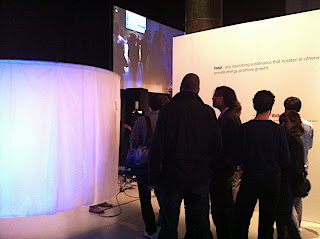
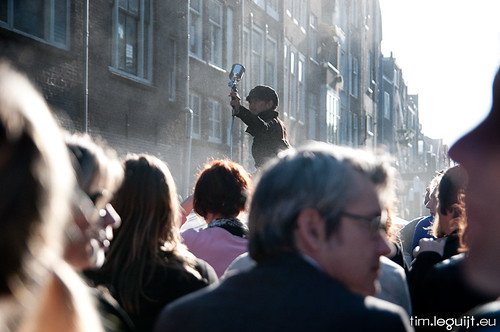
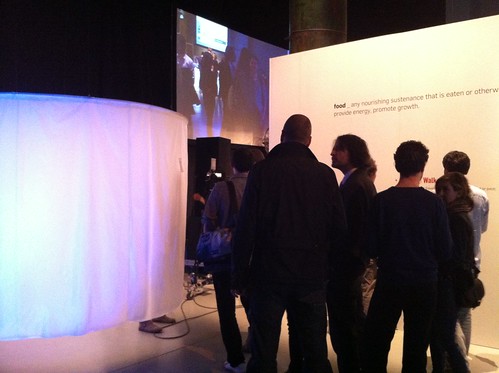
(作品を体験するために待つ、長蛇の列が・・・)
■V2というメディアアートで有名なスペースが、なぜ嗅覚のアート?!
あるイギリスの若者への調査で、「スマートフォンと嗅覚、失うとしたらどちらがいい?」と質問したところ、後者を選んだ人が多かったのだそうです。それを受けて、「現代において、ソーシャライジングすることがとても重要となっているが、ソーシャルネットワークを失ったとしても嗅覚を維持する事のメリットって、なんだろう?」というのがこのイベントの問題提起でした。
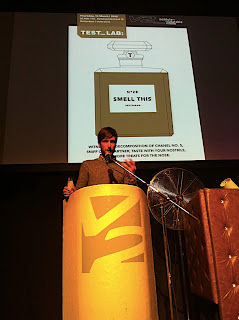
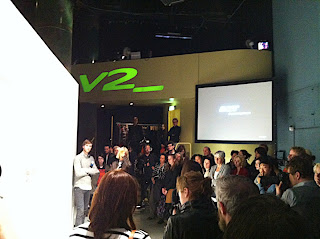
個人的には、V2という場で発表できたことが大きな区切りとなりました。嗅覚のアートを始めた当初から、ずっと意識していたし、目標としていたからです。というのも、それまではメディア・アートの世界にいた私が、電気もコンピュータも使わない、しかも嗅覚という、アート界では部外視されていた感覚に取り組み始めたので、いささか周囲を驚かせたのです。でも、「いつかは、V2などのようなメディア・アート系も、私のこの動きを理解する日がくるだろう」とずっと信じてきました。現在の「嗅覚のアート」はこれまで、クラシカルな美術界の中で語られてきましたが、メディア・アート界にも認識される日がようやく来た。それは私の個人的なヒストリーの中で、とても大きなできごとです。
思い起こせば、 V2との関わりは1996年から始まりました。私の師匠であった教授が、「ちょうどオランダのV2というところで展示をしきたよ」と、そのフェスティバルのビデオを見せてくれたのです。その雰囲気が、オトナかっこよくて痺れました。それから様々なプロジェクトで、いろんな立場でV2とは関わってきました。最初はこの教授の教え子として半ば強引に押しかけ(笑)、その後は駆け出しの作家として、日本語の翻訳者として、友人として、作家の妻として、キュレーターとして・・・etc。もうここのスタッフは、ちょっとファミリーみたいな存在です。
■なぜシャネル5番を選んだの?
この質問をよく受けます。
(1)前のプロジェクトで使ったのが余っていたから、参考として使えた
(2)調香のサンプル・フォーミュラが手に入った
(3)オートクチュール・デザイナーであった叔母が使っていたのがシャネル5番で、私の人生に最も影響を与えた香水として、私も実際に使っているので。
(4)シャネル5番が、香水の歴史から見た場合、現代の模範的な香水であるから。
シャネル5番が現代の模範であることには、理由があります。化学技術の進歩により20世紀初頭にもたらされたアルデハイドという合成香料が、当時の常識以上の濃さで使われた、初めての香水だからです。一説には、調香師のアシスタントが、その濃度を10倍に間違えてブレンドしてしまい、それが以外に面白い結果を生んだ・・・というのがシャネル5番の伝説となっています。その後、マリリン・モンローなどが「裸になってもシャネル5番は着ているわ」と発言し、シャネル5番の伝説的なイメージを確かなものにしたことは、皆さんもご存知のとおりです。
■リンク
Smell_This
http://www.v2.nl/events/test_lab_smell_this
OLFACTOSCAPE
http://www.v2.nl/archive/works/olfactoscape
olractoryart.net 上に掲載された、Caro Verbeek によるレビュー
http://www.olfactoryart.net/index.php/olfactory-news/14-olfactory-news/109
(以下、翻訳中です)
OLFACTO (= olfactory) SCAPE (= scenery)
OLFACTOSCAPE is an invisible panorama painting. It’s a 3m diameter space created with a curtain. The walls are “painted” with smells.
Perfume is a composition of multiple ingredients, often more than a hundred. Making a perfume is like making a piece of music: creating a harmony with multiple tones. In this version of the OLFACTOSCAPE, independent components (aromatic ingredients) of Chanel No. 5 are separately placed (sprayed) at the different locations. If you stand in the middle point of the space, you would smell the “harmony.” If you walk along the curtain, you would smell the “individual tones.” The intention is thus, to deconstruct the Chanel No. 5, and to reconstruct it again.
Enter the space, close your eyes, walk and sniff like a dog. Some scents come closer to you, while others fade away. When do you smell the “harmony” and when do you smell the “individual tones?” Do the scents navigate you instead of you navigating yourself? Is there any scent that attracts you, or that makes you want to approach?
This project is supported by Omega Ingredients and inframince.jp.
A multi-sensorial perception of space – ‘Olfactoscape’ by Maki Ueda
A review by Caro Verbeek, an art historian
(cited from http://www.olfactoryart.net/index.php/olfactory-news/14-olfactory-news/109)
‘Because we have two nostrils and because we can move, we are able to perceive smells in stereo and navigate through a space by inhaling’
“OLFACTOSCAPE VER. 2” の続きを読む