パリ協定の匂い

– 匂いは地球温暖化問題の解決に貢献できるか? –

空間インスタレーション (2020)


{youtube}D5SwFEmpvyY{/youtube}

{youtube}QHuNfF4h_DE{/youtube}


DATE: 2020年9月15日(プルミエ)-16日
CONTEXT: マツダ・フランス 100 周年記念イベント
CURATOR/PRODUCER: Natacha Ami (48 Nord Paris)
SPONSOR: マツダ・フランス


D664063A-C394-430B-A5AE-A0943A195670_1_105_c


コンセプト:

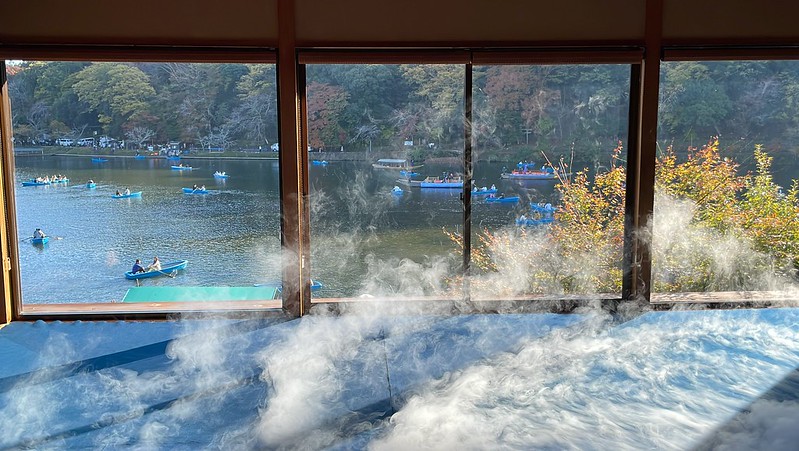
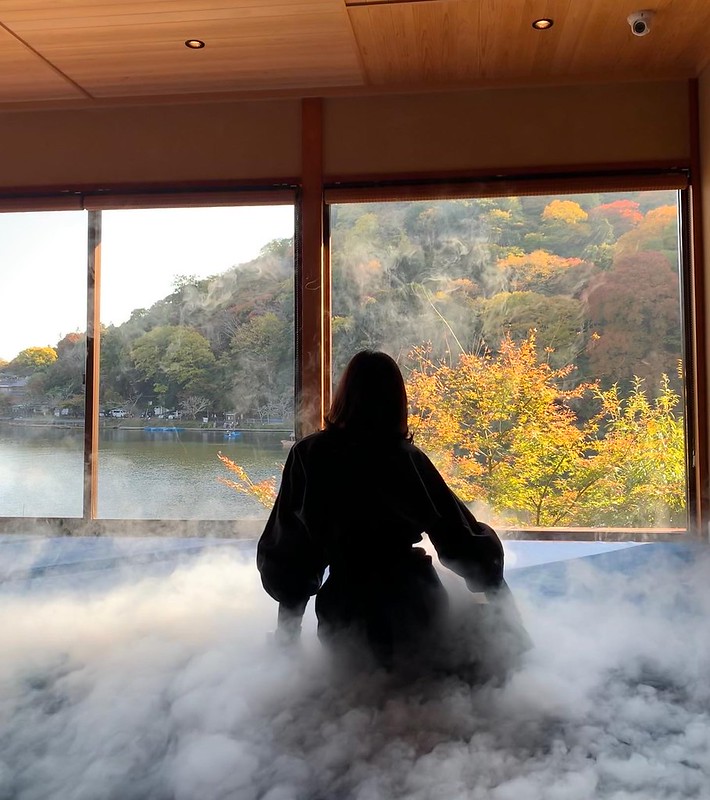
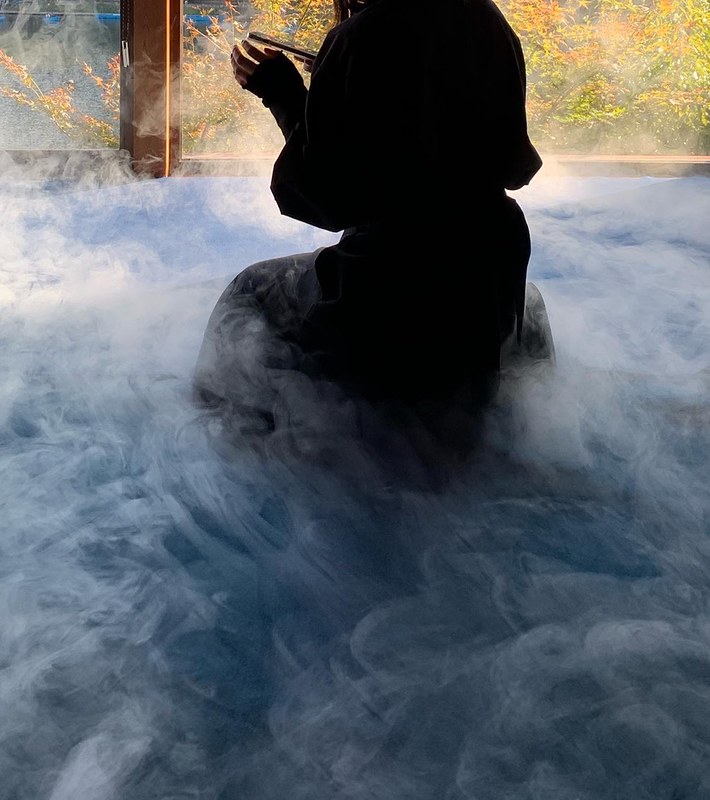
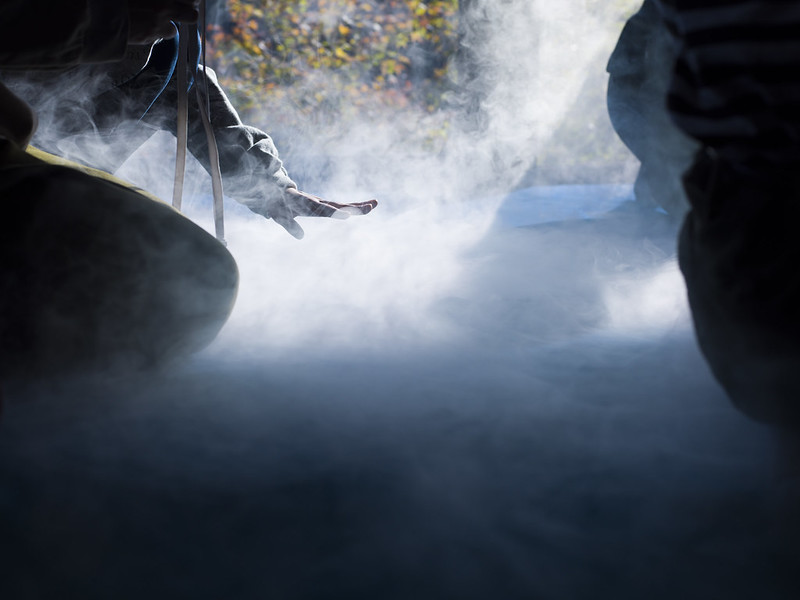
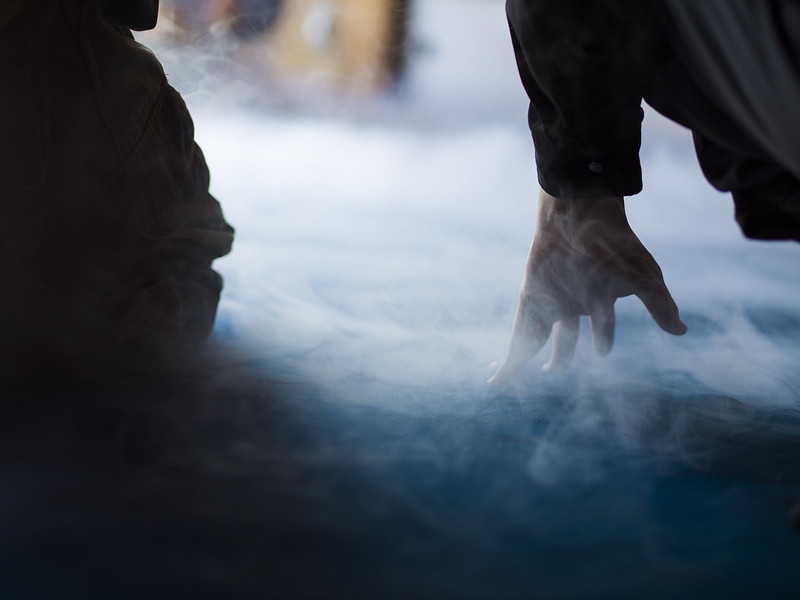
匂いによって、涼しく感じられたり、温かく感じられたりすることがあるのだろうか。このインスタレーションは、この問いから発した、嗅覚と温度感覚に関する、実験室のような作品である。二つの独立したコンパートメントは、同じ温度に保たれている。片方には冷感覚に作用すると言われている匂いグループ、もう片方には温感覚に作用すると言われている匂いグループをディフュージョンしている。体験者は実際に二つの空間を行ったりきたりしながら、その効果を確める。

もし「冷感の部屋」でより涼しく感じれられるのであれば、猛暑の夏に積極的にそれらの匂いを活用すればいいし、寒い時は「温感の部屋」の匂いを活用すればいい。私たちは匂いによりレジリエンスを獲得し、エネルギー消費を抑えることができるかもしれない。

芳香物質は、鼻だけではなく、肺や眼などの粘膜にも働きかける。実際にわたしが冷感の香りをテストしている時は、湿度の高い真夏の猛暑日だったにも関わらず、肺が寒くなった。温感の香りは、喉が熱くなった。芳香物質は粘膜だけでなく、汗腺からも吸収される。匂いが匂いだと認識されなくても、こうして冷感、温感に働きかけることさえある。

このリサーチにあたっては、シカゴ大学のサイエンティストでありアーティストでもある、Jas  Brooks氏より全体的なアドバイスをいただいた。彼が中心となっている”Smell, taste, & temperature symposium”も参考になった。この領域は学者にとってもまだ未知の世界のようだ。特定の芳香物質の三叉システムへの作用に関しては、Félix Vianaの論文”Chemosensory Properties of the Trigeminal System” を参考にした。

{冷感の香料}

  • menthol
  • eucalyptol
  • thymol
  • citral
  • cinnamaldehyde
  • linalool
  • methyl salicylate

    FD-MAZDA-01-49

{温感の香料}

  • Black pepper
  • Camphor
  • Eugenol
  • Red Chili Extract (self extracted)
  • Methyl Salicylate
    FD-MAZDA-01-48

制作の過程:
https://olfactoryart.blogspot.com/search/label/%5BSmells%20for%20the%20Paris%20Agreement%5D
https://witch-lab.blogspot.com/search/label/%5B%E3%83%91%E3%83%AA%E5%8D%94%E5%AE%9A%E3%81%AE%E5%8C%82%E3%81%84%5D


アーティスト・ステートメント:

I am deeply grateful to Mazda and the agent for inviting me here and commissioning my new work.

I have been working in the Netherlands/Japan as an olfactory artist since 2005.  Actually this work is an epidemic in my long career.  This is because it is the first time I have tackled the social problem as global warming.  Climate change is a serious global problem. Why is it 37 degrees today in Paris, in the middle of September? 

What can we do about it with smells?  For example, can we change the way we feel hot and cold with olfaction? This  question was my starting point.  The title of the work is: Smells for the Paris Agreement.

I am diffusing a cooling fragrance and a warming fragrance, made with scientific data, in each of two spaces that are controlled to have the same temperature.  You are all witnesses and test subjects for this little experiment.

I asked a young scientist Jas Brooks from Chicago University for advice which molecules to use. I also read the paper regarding trigeminal nerves and transient receptor potential(TRP), the receptors related to temperature.  What was fascinating to me was that, like perfumery, it’s important to have a balance between the components.  Some components can be both cooling and warming. Methyl Salicylate is a good example.  This is a common scent used in a cold and a warm patch.  When combined with black pepper, it works for warmth, and when combined with eucalyptol or menthol, it works for coolness.

The following components were used in the final composition.  They are mostly Synesthetic:

{The Cooling Fragrance}
menthol
eucalyptol
thymol
citral
cinnamaldehyde
linalool
methyl salicylate

{The Warming Fragrance}
Black pepper
Camphor
Eugenol
Red Chili Extract (self extracted)
Methyl Salicylate

Interestingly, linalool, eugenol and cinnamaldehyde, which I used for a cooling fragrance, are considered “warm scents” in perfumery.  This is where science and art differ.  In this work, I faithfully followed the science.

It’s also interesting to note that Menthol, the heart of a cooling fragrance, only works at temperatures below 25 degrees Celsius.  Today, it’s hard to get below 25, so it’s possible that the cooling room isn’t working properly.  I wasn’t expecting it to get this hot in Paris. However people mentions that they feel like being in a forest in the cooling room.

In my own experiment I found that my throat was dry in the warm room.  Yesterday’s guest described its dry feel as “cork-like”. In contrafry, My lungs were cold in the cold room, and I also felt cold where I sweated.  Smells are absorbed by the body through mucous membranes and sweat glands, even if we don’t feel they are smells. 

Enjoy the intersection of the senses of smell and touch.

 
キュレーター・ステートメント(in French):
 

 Maki Ueda – Du Kôdô à l’art olfactif

L’odorat, sens un peu ”oublié”, est remis au goût du jour par l’attrait actuel pour l’invisible et l’éphémère. La Japonaise Maki Ueda a fait de l’odeur son médium de prédilection. Elle est devenue une des références internationales de l’art olfactif contemporain émergent.
Partant de là, la créatrice s’est intéressée au Kôdô cet art japonais qui consiste à humer l’encens issu de bois précieux. Elle s’est rapidement affranchie du protocole instauré par les maîtres du Kôdô. Elle a repris en revanche à son compte, leur goût pour la performance et le jeu. Dans son œuvre, cette globe-trotteuse formée aux sciences de l’environnement, s’appuie autant sur les pratiques des arts numériques que sur celles, ancestrales, de la parfumerie de Grasse ou de Delhi.

Très vite, son approche multiculturelle et avant-gardiste de l’odorat, impose la jeune artiste auprès des milieux artistiques du monde entier. Cette pionnière de l’olfaction – qui se partage entre le Japon et les Pays-Bas – est rapidement sollicitée pour la mise en place de performances. Celles-ci mêlent danse, théâtre, musique et arts graphiques.

Les fragrances qu’elle compose, n’utilisent que des produits naturels. Elle va se former à Grasse pour mieux comprendre l’extraction naturelle du parfum. En 2014, elle décide de rejoindre Aastha, l’héritière d’une lignée d’artisans parfumeurs, de Kannauj, dans le nord de l’Inde. Cette dernière lui fera découvrir les secrets de l’Attar, une méthode de distillation à l’huile – et non à l’alcool, comme elle se pratique en Occident – vieille de 5 000 ans !

Ce qui m’intéresse dans l’art olfactif, aujourd’hui, c’est l’expérience immersive, la perte de repère et l’idée même du mouvement », résume Maki Ueda. A l’occasion du lancement de MX-30, Maki Ueda propose une expérience olfactive exclusive en référence aux accords de Paris sur le climat.

Elle convie les participants à s’interroger sur l’odeur du réchauffement climatique. Cette installation, travail de laboratoire sur les sens, l’odorat et la température, tente de répondre à ces questions. Maki Ueda présente ici deux structures indépendantes maintenues à la même température. L’une diffuse des odeurs qui agissent sur les sens froids et l’autre des odeurs qui agissent sur les sens chauds. Les visiteurs se promènent entre ces deux espaces.

L’artiste suggère à l’utilisateur d’utiliser les odeurs du froid pendant les périodes chaudes et les odeurs du chaud quand il fait froid. Nous pourrons peut-être ainsi gagner en résilience grâce aux odeurs et réduire notre consommation d’énergie.

Les substances aromatiques agissent non seulement sur notre nez, mais aussi sur nos poumons, nos yeux et nos muqueuses. « Lorsque je teste un parfum froid, mes poumons sont froids, même lors d’une journée d’été très chaude et humide. L’odeur chaude a rendu ma gorge chaude. Les substances aromatiques sont absorbées par les glandes sudoripares ainsi que par les muqueuses. Les odeurs peuvent même agir sur les sensations froides et chaudes de cette manière, même si elles ne sont pas reconnues comme des odeurs ».

Pour cette recherche Maki Ueda a travaillé avec Jas Brooks, un scientifique et artiste de l’Université de Chicago.

戦争の果汁〜広島・長崎〜

[to be translated]

DSC_2641


for “The Smell of War” exhibition

 
Title: The Juice of War Hiroshima and Nagasaki
 
Year: 2015

When I was a child, my bedroom contained a shelf of my mother’s books and one of these book was about Hiroshima and Nagasaki. Inside I found photos of burned and rotten bodies. A field full of bodies that no longer look like bodies. It was in the high summer season so the bodies would quickly rot and flies laid eggs wherever they could.

The photos were so shocking to me that for nights I was afraid to go to sleep.  But I did not dare ask my mother to remove that book from my bedroom because it seemed rude to the victims. As I grew up I peeked into the book again and again, out of curiosity for the atomic bombings, and I realized that I was getting better in dealing with the fear. I ended up sleeping with that book until I left home at the age of 17.

 
I completely forgot about these pictures, but all of sudden, while I was thinking what to show here, I realized that they were the reason why I could not think anything else beside the smell of rotten flesh when I think of “the smell of war”.

In other words, working on this concept was digging into my memories.

Instruction:
Please put your head in a bowl. This smell was manually extracted from the juice of burned and rotten flesh.


The prime minister of Vlamish government also enjoyed the work at the opening.
 
 
At: The castle De Loving, Poperinge, Belgium. 

The Smell of War exhibition:

Curated by:  Peter de Coupere

 
[making]
 
 
This is a bizarre  story of purchasing meat of 20 euros at a supermarket, and made it rotten till it starts stinking for extracting the smell…  I am a bit ashamed to tell you the whole story but this is the real story behind this work.
 
When the curator Peter de Coupere asked me to participate in the exhibition with the theme of “the smell of war”, I could not think of anything else than the smell of Hiroshima and Nagasaki. That would be the case by most of Japanese.  We grew up with reading the cartoons “Hadashi no gen はだしのゲン”, with full of illustration of burned and rotten corps and maggot. Also it illustrates the bad odor.
 
 
The interface design:


Purchasing the parts for “katrol”
 
 
I sew the acrylic bowl myself because there was no company who could do this… it was quite some work.
 
 
I asked Peter, the organizer, for hanging the bowl with some instructions.
 
In Japan at my atelier: I bought pieces of meat at a local supermarket: checkin and pork, and burned them.


And dried them for 10 days in the sunlight.


This is the simulation of Hiroshima and Nagasaki. It was high in the summer time when they got bombed, and the burned corps got rotten quickly.  Flies lay eggs and it stank terribly everywhere.
 
After 5 or 6 days they started to smell like a garbage.  Around the 10th day it started to stink sour, and this was the limit (also for my neighbor…).
 
I extracted a little to check the smell and turned out that it was missing the burned scent, so I burned them extra.


Then sliced them.  My cutting board was suddenly covered with the flies. It was like a horror movie. I couldn’t inhale even, so I inhaled the fresh air 10meters away and ran to the cutting board, and repeated this.
 
 
After the extraction, I filterd it, but it also releases smells everywhere… I got headache from it.  If I would have continued this process I would have gotten depressed.
 
 
In my fridge is the extract and beer mixed up…it’s safe as long as it’s concealed 🙂


オー・ド・パルファン パーフェクト・ジャパニーズ・ウーマン

– perfect Japanese woman になるための香水 –

パフューム・アート、インスタレーション (2008)


作品概要

このインスタレーションは「糠味噌」、「畳」、「味噌汁」、そして「石鹸」の4つの香水で構成されます。香水店のように、拭香紙にスプレーして匂いを嗅いだり、着用してください。スプレーした後20秒待って、アルコール分が蒸発してから匂いを嗅いでください。

それぞれの匂いは、日本の社会が期待する女性像を象徴しています。匂い自体は、作家の手によりそれぞれの 素材から抽出されました。

DSC_2062

DSC_2070

DSC_0990

DSC_1021


香水に付随する説明書


No. 1  糠味噌

– 密かに「糠味噌臭い女」に憧れる貴女に –


「糠味噌臭い」という表現が日本語にあります。所帯じみて垢抜けない女性に対する貶し言葉です。昔はどの家にも糠床がありました。毎日掻き回さなければならない手のかかるものなので、お母さんの手には糠床の酸っぱい臭いが常に染み付いていました。


しかしそれも徐々に時代遅れになりつつあります。糠漬けはスーパー で買うものとなり、漬け方の奥義を知る者が少なくなってしまった現代、世の男性はやはり心寂しくも思っているものです。


美味しい糠漬けを漬けれる女性こそ最 高にいい女、と思われる時代も間もなくでしょう。食卓にはさりげなくスーパーで買って来た糠漬けを出し、手にはササッとこのパルファンを。糠味噌臭こそ、永久の母性の匂いです。


DSCN5711

DSCN5712

(米の外皮である糠でまず糠床を作り、それをアルコール抽出しました。ザワークラウトにも似た乳酸系の発酵臭がします。)


No. 2  畳

– 「女」としてリフレッシュしたい貴女に –


「女房と畳は新しい方が良い」ということわざが日本語にあります。新しい畳が気持ちいいように、女房も新しい方が気分がいい。何でも新鮮な方がいいという 意味です。


畳はイグサ(藺草)という湿地に生える細長い草で編まれたものです。新しい畳みが気持ちいいのは、清潔だからというのもありますが、新しいものほ どイグサがいい匂いを発しているからでもあります。しかし残念なことにそれは月日が経つにつれてだんだんに薄れていきます。「女房」がそんなイグサの匂いに 例えられているのが、このことわざです。


そんな失礼な、「旦那」だって新しい方がいいじゃない、といった反論は、とりあえず横においておきましょう。女とし て、フレッシュで若々しい気持ちを思い出したいとき、このパルファンはあなたの強い味方です。どの世代の女性にもお使いいただけます。

DSCN5481

DSCN5482

(イグサを岡山県から取り寄せ、それをアルコール抽出しました。)

No. 3  味噌汁

– 台所の女を演出したい貴女に –


トントントンという軽快な包丁の音と、味噌汁のいい香りで目覚める幸せな朝 — ライフ・スタイルの欧米化に伴い、このような光景も消えつつある昨今。


このパ ルファンはルーム・スプレーとしてもお使いいただけるため、そんな朝を手軽に演出することも可能です。家族をただ叩き起こすのではなく、幸福感の中でそっと起こしてあげる、そんな賢く優しい女性になりたい貴女のためのパルファンです。


また例えば旦那様にはナイショにしたい密かな冒険の後など、旦那様の鼻をカム フラージュするのに、このパルファンは貴女の強い見方です。シュッシュッと身に振りかけ、一日中台所にいたかのように演出しましょう。

DSCN5684

DSCN5685

(普段わたしたちが知覚する味噌汁の匂いは、味噌汁が蒸発したときの匂いです。なので味噌汁をフラスコの中で作り、匂いだけを蒸溜しました。)


No. 4  石鹸

– 純粋で清潔な女を演出したい貴女に –

朝シャンしてふわっとした香りを髪で奏でる、それは日本の女子高生の常識です。ですが、時間も余裕もないけど手軽に装いたい、そんなときもあります。このパルファンをひと振りすれば、あたかも今さっきシャワー・ルームから出て来たかのような香りを振り撒くことができます。

日本の男性は概して、純粋で清潔なイメー ジの女性を好むものです。貴女が小悪魔であればなお一層、このパルファンはその魅力を引き立たせてくれるでしょう。

DSCN5692

DSCN5705

(既製品の石鹸をチーズ下ろし器で下ろし、蒸溜しました。)


これまでの展示

Gallery Roodkapje, Rotterdam (PREMIER), 09.2008.

Dutch Design Week, Eindhoven, 17-25.10.2009.

World Technology Network Award, New York, 07.2009.

Artists Summit Kyoto, Japan, 12.2009.


クレジット

Camera Japan Festival 2008